Best Indoor Plants for Beginners
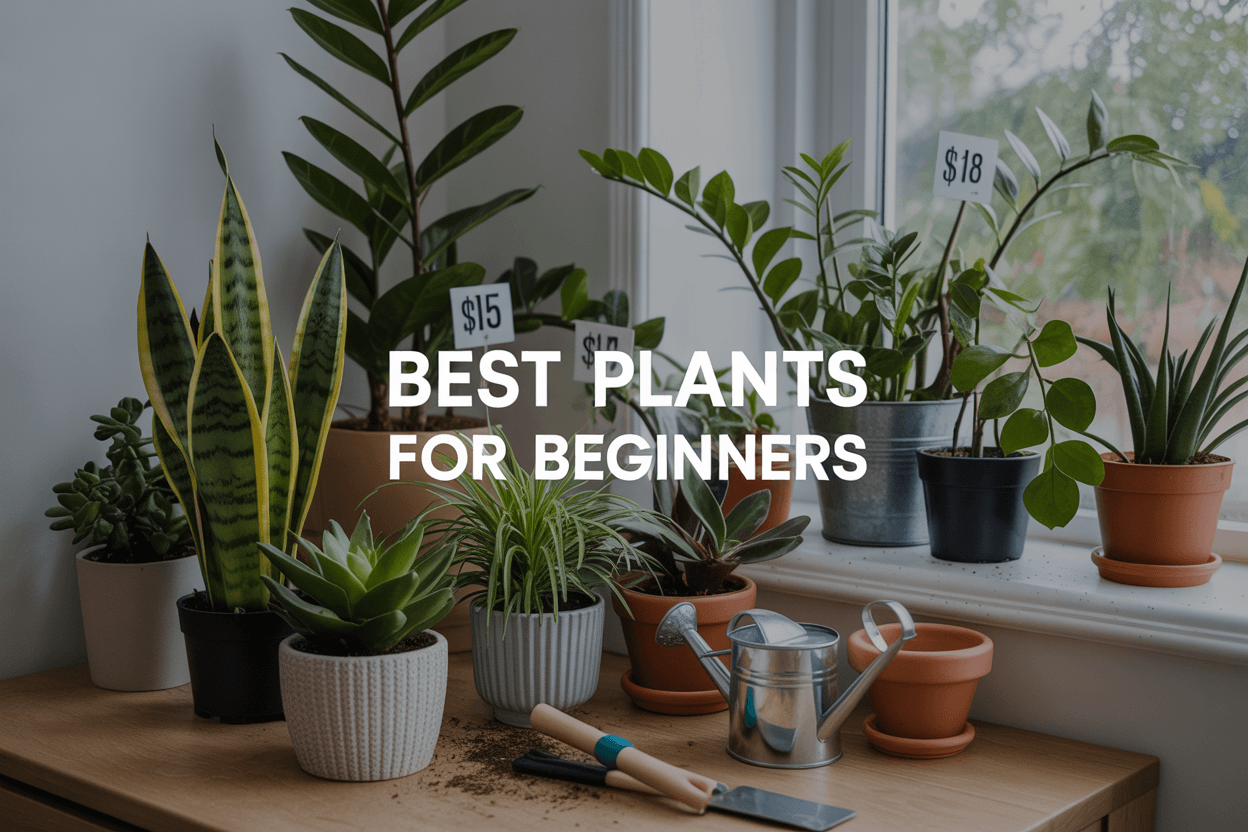
Starting your best indoor plants journey doesn’t have to be overwhelming or expensive. This guide is perfect for new plant parents who want to bring greenery into their homes without breaking the bank or dealing with high-maintenance plants that demand constant attention.
The best indoor plants for beginners are forgiving, affordable, and practically grow themselves. Many cost under $20 and can handle occasional neglect while still looking great.
We’ll cover the top low-maintenance plants that thrive even if you forget to water them sometimes, plus budget-friendly options that won’t strain your wallet. You’ll also learn the basic care essentials every new plant parent needs to know, so you can keep your green friends happy and healthy from day one.
Low-Maintenance Plants That Thrive with Minimal Care
Snake Plants for Busy Schedules
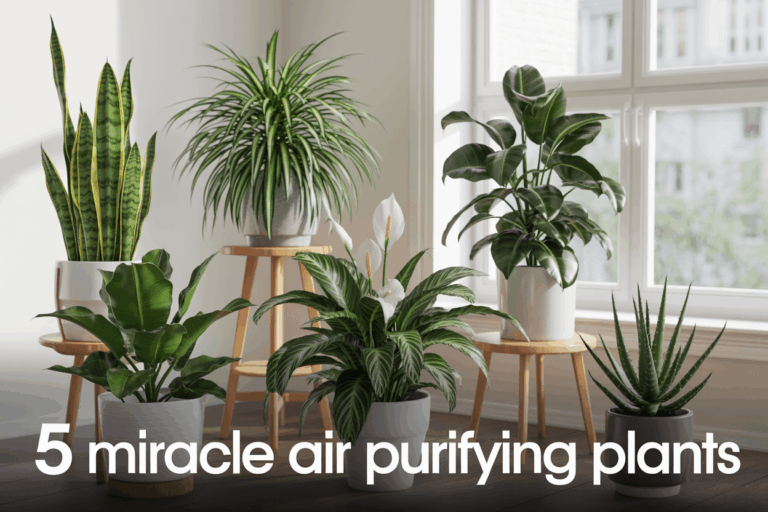
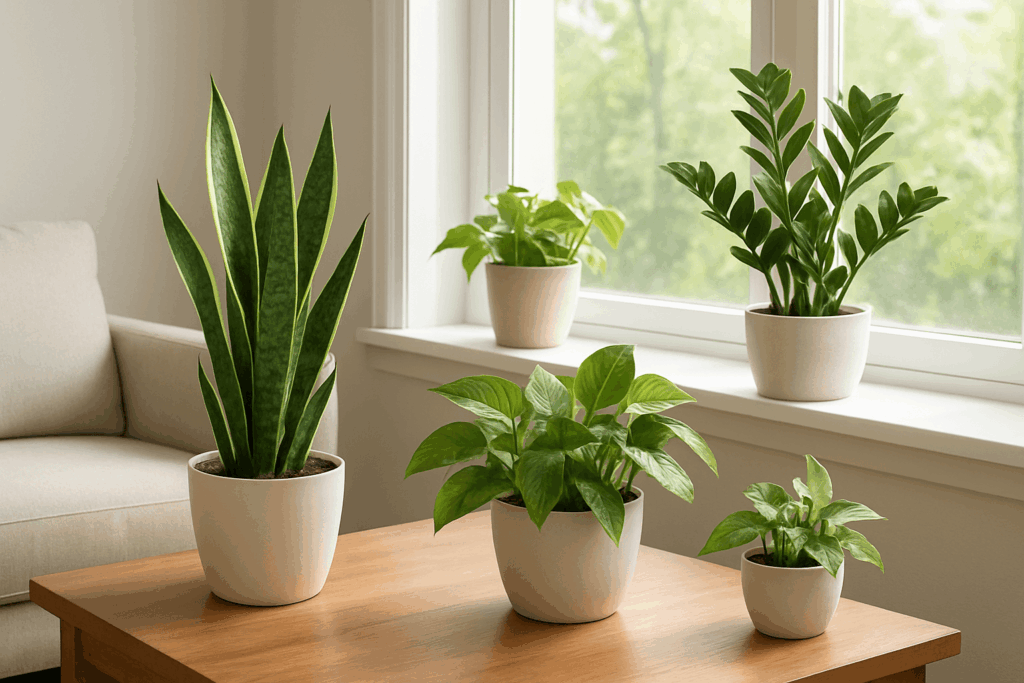
Snake plants (Sansevieria trifasciata) are the superheroes of the best indoor plants world, especially for people juggling work, family, and social commitments. These striking plants with their tall, sword-like leaves can handle weeks of neglect without batting an eye. Their thick, succulent-style leaves store water efficiently, making them incredibly drought-tolerant.
The beauty of snake plants lies in their flexibility. They’re perfectly content in low light conditions, making them ideal for offices with fluorescent lighting or apartments with limited natural light. While they appreciate bright, indirect light, they won’t throw a tantrum if placed in a dim corner. Water them only when the soil feels completely dry, typically every 2-4 weeks depending on your home’s humidity and temperature.
Snake plants also work overtime as air purifiers, removing toxins like formaldehyde and benzene from your living space. They’re one of the few plants that release oxygen at night, making them excellent bedroom companions. With varieties ranging from the classic green-and-yellow striped ‘Laurentii’ to the cylindrical ‘Cylindrica’, you can find a snake plant that matches your aesthetic preferences.
ZZ Plants for Forgetful Waterers
The ZZ plant (Zamioculcas zamiifolia) is practically indestructible, earning it the nickname “eternity plant” in some circles. If you’re someone who travels frequently, works long hours, or simply forgets to water plants, the ZZ plant should be your first choice. These glossy beauties can survive up to a month without water, thanks to their rhizome root system that stores moisture underground.
ZZ plants adapt to virtually any lighting condition, from bright indirect light to low-light corners where other plants would struggle. Their waxy, dark green leaves reflect light beautifully, adding a sophisticated touch to any space. The plant grows slowly but steadily, producing new stems that emerge from the soil like little green shoots.
Overwatering is the only real threat to ZZ plants. They prefer their soil to dry out completely between waterings, making them perfect for beginners who tend to be overzealous with the watering can. During winter months, you might only need to water once every 4-6 weeks. The plant will actually tell you when it needs water – the leaves will start to wrinkle slightly when the roots are getting thirsty.
Pothos for Quick Growth Results
Pothos plants offer instant gratification for new plant parents who want to see quick results. These fast-growing vines can add several inches to their trailing stems each month under the right conditions, providing that satisfying sense of success that keeps beginners motivated in their plant journey.
The most popular variety, Golden Pothos, features heart-shaped leaves with beautiful yellow variegation that brightens any space. Pothos plants are incredibly versatile – you can train them to climb a moss pole, let them trail from a hanging basket, or drape them along shelves for a cascading effect. They’re also easy to propagate, allowing you to create new plants from cuttings to expand your collection or share with friends.
These plants tolerate a wide range of lighting conditions, though they show their best colors in bright, indirect light. They’re forgiving with watering schedules and will droop slightly when thirsty, giving you a clear signal when they need attention. Water when the top inch of soil feels dry, typically every 1-2 weeks.
Pothos plants are excellent air purifiers and can help remove common household toxins. They’re also incredibly resilient – even if you accidentally let them get too dry or overwater them occasionally, they bounce back quickly with proper care adjustments.
Budget-Friendly Plant Options Under $20
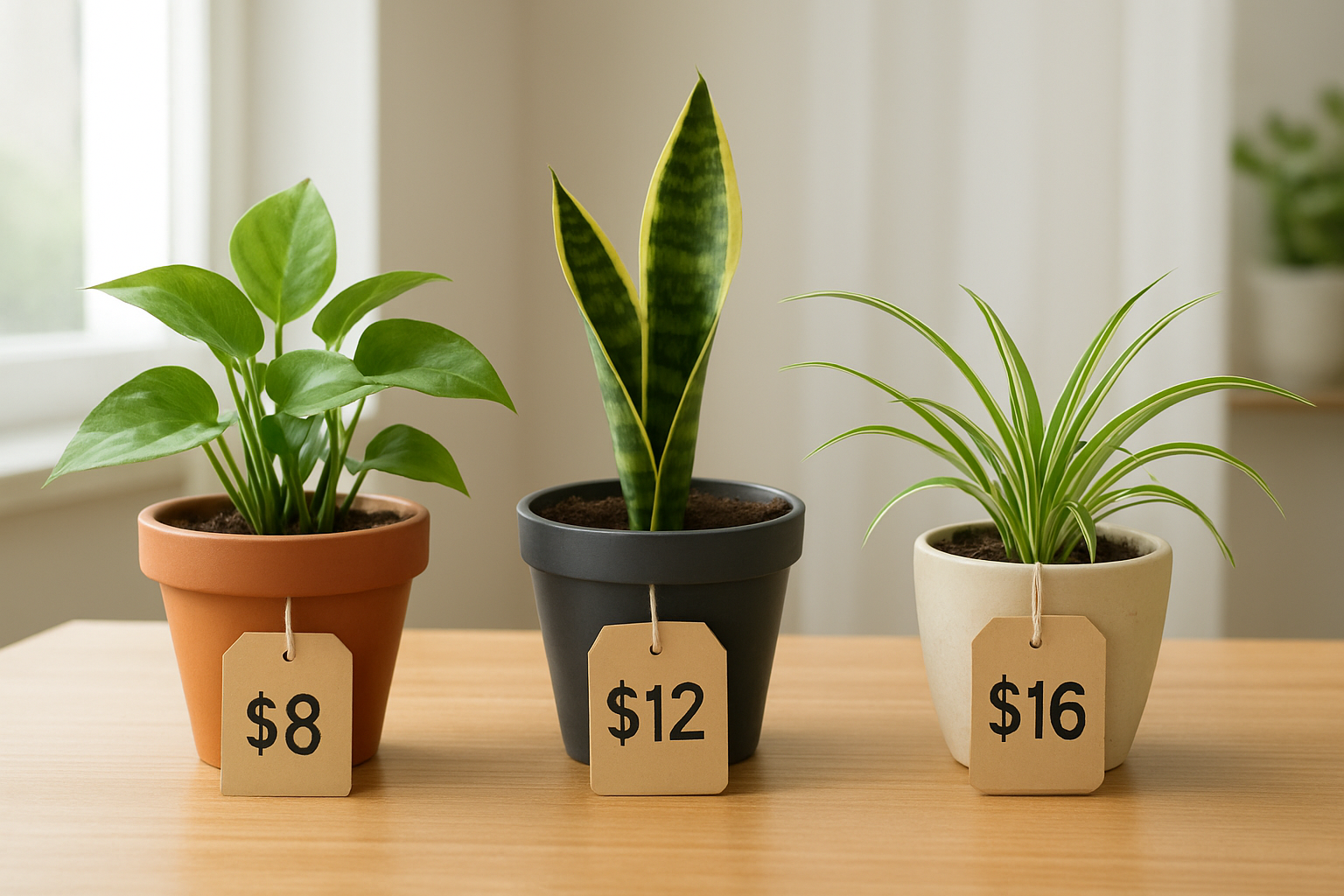
Spider Plants That Multiply for Free
Spider plants are basically the gift that keeps on giving. You can pick one up for around $10-15, and before you know it, you’ll have enough baby plants to fill your entire home or share with friends. These cheerful plants produce little plantlets called “spiderettes” that dangle from the mother plant like tiny green parachuters.
The best part about spider plants? They’re practically indestructible. They’ll tolerate low light, occasional forgotten waterings, and even survive if you accidentally knock them over. When the babies start appearing, simply place a small pot of soil underneath one of the dangling plantlets while it’s still attached to the mother plant. Within a few weeks, it’ll develop roots and can be cut free to become its own independent plant.
Care requirements:
- Bright, indirect light (but tolerates low light)
- Water when top inch of soil feels dry
- Room temperature between 65-75°F
- Occasional misting for humidity
Rubber Trees with Long-Term Value
Don’t let the name fool you – rubber trees aren’t just for industrial purposes. These glossy-leafed beauties start small at around $15-20 but can grow into stunning floor plants worth $100 or more as they mature. Their thick, waxy leaves have an almost leather-like texture and come in classic green or dramatic burgundy varieties.
Rubber trees are incredibly forgiving for beginners. They adapt well to different lighting conditions and won’t throw a tantrum if you skip a watering session. As they grow, you can prune them to maintain a bushy shape or let them stretch tall for a dramatic statement piece. The key is patience – these plants reward consistent care with steady, impressive growth.
Money-saving tip: Buy a small rubber tree and repot it annually. What starts as a desktop plant can become a showstopper that would cost significantly more to buy mature.
Peace Lilies for Maximum Impact
Peace lilies deliver serious bang for your buck at just $12-18 each. These elegant plants feature dark green leaves and produce stunning white flowers that can bloom multiple times throughout the year. They’re like having fresh flowers that actually last, making them perfect for adding sophistication to any room.
These plants are practically mind readers when it comes to watering needs. Their leaves will droop slightly when they’re thirsty, then perk right back up after a drink. Peace lilies also act as natural air purifiers, removing harmful toxins from your indoor environment while looking absolutely gorgeous doing it.
Bloom boosting secrets:
- Keep soil consistently moist but not soggy
- Provide bright, filtered light
- Feed monthly during growing season
- Remove spent flowers to encourage new blooms
Aloe Vera with Practical Benefits
Aloe vera plants cost around $8-15 and offer way more value than just good looks. These succulent superstars store healing gel in their thick leaves, perfect for treating minor burns, cuts, or skin irritation. Having one in your kitchen is like keeping a natural first aid kit on your windowsill.
These desert natives are perfect for forgetful waterers since they actually prefer to dry out between waterings. Overwatering is their biggest enemy, so when in doubt, wait another week. Aloe plants also produce offshoots called “pups” that can be separated and potted to create new plants, giving you the same multiplication benefits as spider plants.
The gel inside mature aloe leaves can be harvested by cutting a leaf near the base and squeezing out the clear, soothing gel. Just make sure your plant is at least two years old before harvesting, and never take more than one-third of the leaves at once.
Essential Plant Care Basics for New Plant Parents
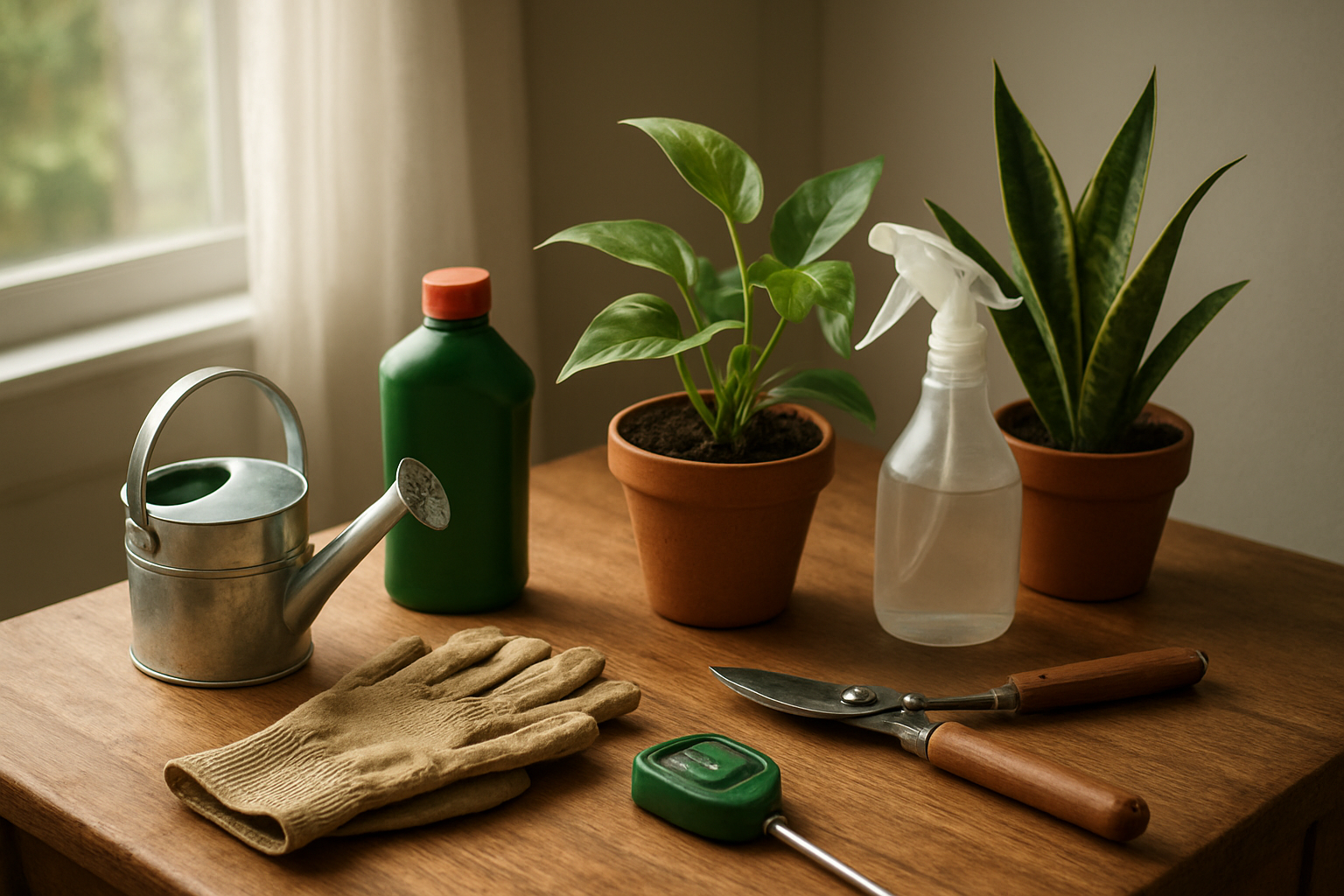
Proper Watering Techniques to Avoid Root Rot
Watering might seem straightforward, but it’s actually where most new plant parents go wrong. The golden rule? Most of the best indoor plants prefer to dry out slightly between waterings rather than sitting in constantly moist soil.
Check the soil moisture by sticking your finger about an inch deep into the potting mix. If it feels dry, it’s time to water. If it’s still damp, wait another day or two. This simple finger test works better than any fancy moisture meter for beginners.
When you do water, give your plants a thorough drink. Water slowly until you see it draining from the bottom holes. This ensures the entire root system gets hydrated. Empty the drainage tray after 30 minutes to prevent your plant from sitting in standing water, which leads to root rot.
Different plants have different thirst levels. Succulents like snake plants can go weeks between waterings, while tropical plants like pothos prefer more frequent drinks. Pay attention to your plant’s leaves – droopy or wrinkled leaves often signal thirst, while yellow leaves usually mean you’re overdoing it.
Season matters too. Plants drink less water during winter months when growth slows down. You might water weekly in summer but only every two weeks in winter.
Light Requirements Made Simple
Light is food for plants, but artificial indoor lighting rarely matches the intensity of natural sunlight. Understanding your home’s light conditions helps you choose plants that will actually thrive, not just survive.
Bright, indirect light means a spot near a window where the plant gets plenty of light but isn’t hit by direct sun rays. South-facing windows typically offer the brightest light, while north-facing windows provide gentler, indirect light perfect for many houseplants.
Direct sunlight streaming through windows can actually burn plant leaves, creating brown, crispy spots. Save the sunny windowsills for succulents and cacti that love intense light.
Medium light areas sit about 3-6 feet from a bright window. Many popular houseplants like rubber trees and ZZ plants handle these conditions beautifully. Low light doesn’t mean no light – it refers to spots that receive some natural light but aren’t near windows.
If your space lacks natural light, LED grow lights can supplement what nature provides. Place them 12-18 inches above your plants and run them for 12-16 hours daily.
Watch your plants for light stress signals. Leggy growth with long spaces between leaves means your plant is stretching toward light and needs a brighter spot. Pale or yellowing leaves can also indicate insufficient light.
When and How to Fertilize
Think of fertilizer as vitamins for your plants, not a magic growth potion. During the growing season (spring and summer), most houseplants benefit from monthly feeding with a balanced liquid fertilizer diluted to half strength.
Skip fertilizing during fall and winter when plant growth naturally slows down. Feeding dormant plants can actually stress them out and cause more harm than good.
Look for a balanced fertilizer with equal parts nitrogen, phosphorus, and potassium (like 10-10-10). Liquid fertilizers work well for beginners because they’re easy to control and less likely to cause fertilizer burn than granular options.
Signs your plant needs food include slow growth, pale leaves, or leaves that seem smaller than usual. However, don’t assume every plant problem means you need to fertilize more. Overfeeding causes brown leaf tips, excessive green growth with few flowers, and can make plants more susceptible to pests.
Always fertilize when the soil is already moist to prevent root damage. Never feed a thirsty plant – water first, then fertilize a day or two later.
Common Beginner Mistakes to Avoid
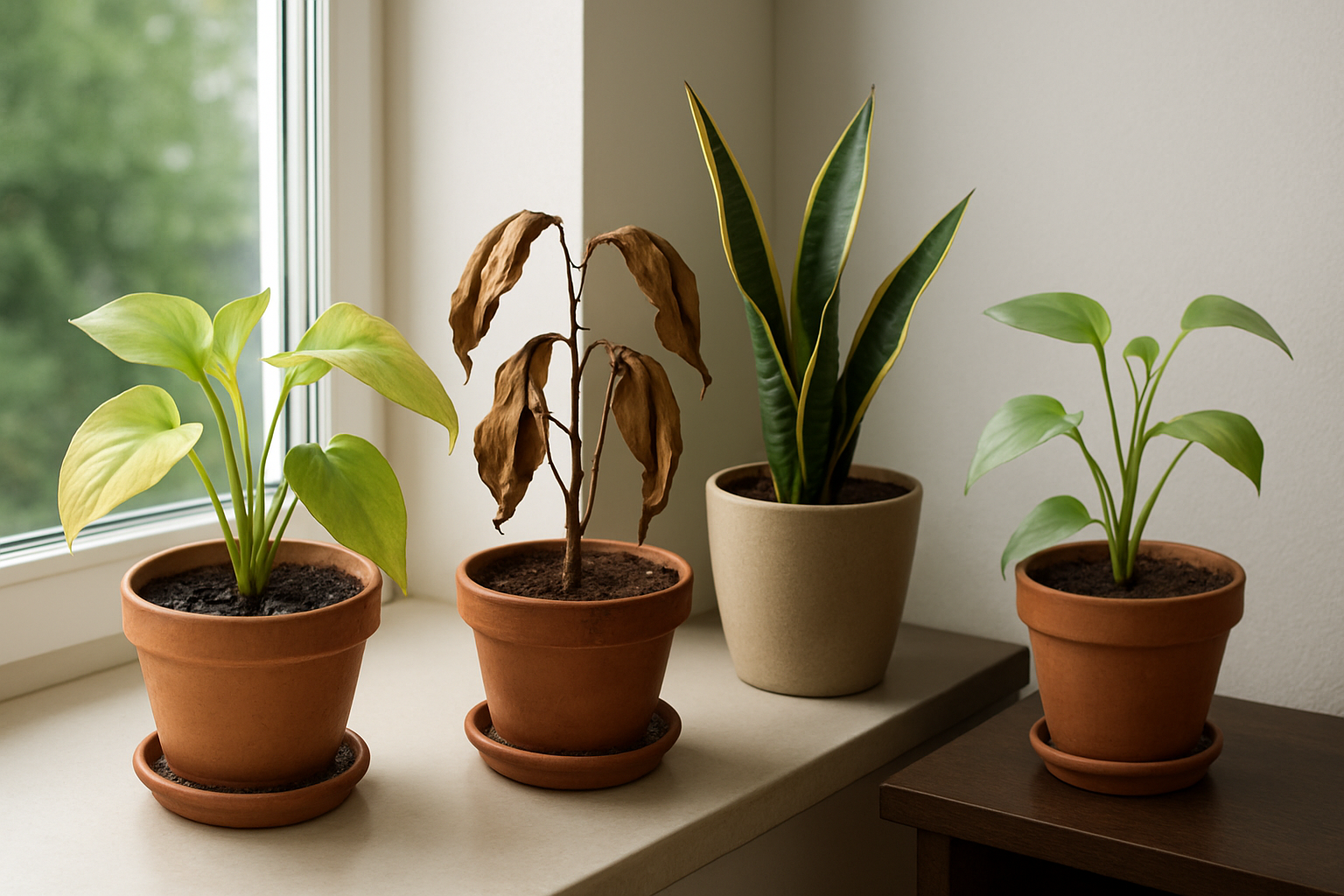
Overwatering Warning Signs
The number one killer of houseplants isn’t neglect—it’s too much love in the form of water. New plant parents often think more water equals better care, but most of the best indoor plants actually prefer to dry out between waterings. Yellow leaves that feel mushy or soft are your first red flag. When roots sit in soggy soil, they can’t breathe and start to rot, turning black and developing a foul smell.
Check the soil before reaching for that watering can. Stick your finger about two inches deep into the soil—if it’s still moist, hold off on watering. Droopy leaves might seem like a sign your plant needs water, but they could actually mean you’ve been watering too much. Other warning signs include fungus gnats flying around your plant, white mold on the soil surface, or leaves that drop at the slightest touch.
Different plants have different watering needs, so ditch the weekly watering schedule. Succulents might need water once every two weeks, while tropical plants like pothos prefer weekly drinks. The key is learning to read your plants rather than following a rigid routine.
Choosing Wrong Plant Locations
Light is food for plants, but putting your new green friend in the wrong spot can stress it out or kill it slowly. That gorgeous fiddle leaf fig you bought might look perfect next to your dark bookshelf, but it needs bright, indirect light to survive. Meanwhile, placing a snake plant in your brightest south-facing window might actually scorch its leaves.
Most beginners underestimate how much light “bright, indirect light” actually means. This typically refers to a spot within a few feet of a window, but not directly in the sun’s path. East-facing windows provide gentle morning light, while north-facing windows offer consistent but lower light throughout the day.
Temperature swings also matter more than you might think. Avoid placing plants near heating vents, air conditioning units, or frequently opened doors. Your living room might feel comfortable to you, but that draft from the front door creates stress for your plants. Bathrooms work well for humidity-loving plants, but make sure they still get adequate light.
Repotting Too Early or Too Late
The urge to repot a new plant immediately is strong, but resist it. Plants experience transplant shock when moved to new containers, even if you’re trying to help them. Most plants from the nursery can happily live in their original pots for at least six months to a year.
Signs your plant actually needs repotting include roots growing out of drainage holes, water running straight through the pot without being absorbed, or the plant becoming top-heavy and tipping over. Some plants, like peace lilies, will dramatically droop when they’ve outgrown their space.
When you do repot, only go up one pot size. Jumping from a 4-inch pot to an 8-inch pot seems generous, but it can lead to overwatering issues since there’s too much soil holding moisture around the small root system. Spring is the best time for repotting since plants are entering their growing season and can recover more quickly from the stress.
Ignoring Pest Prevention
Pests love stressed, unhealthy plants, so your best defense is keeping your plants happy. But even healthy plants can attract unwanted visitors, especially when you bring new plants home without quarantining them first. Always inspect new plants carefully and keep them separate from your existing collection for at least two weeks.
Spider mites thrive in dry conditions and appear as tiny webs on leaves. Aphids cluster on new growth and leave sticky residue. Scale insects look like small brown bumps on stems and leaves. Catching these problems early makes treatment much easier.
Wipe down leaves regularly with a damp cloth—this removes dust that blocks light and helps you spot problems before they spread. If you do find pests, isolate the affected plant immediately. Neem oil works well as both a treatment and preventive measure, while insecticidal soap can handle most common houseplant pests safely.
Creating Your First Indoor Garden Setup
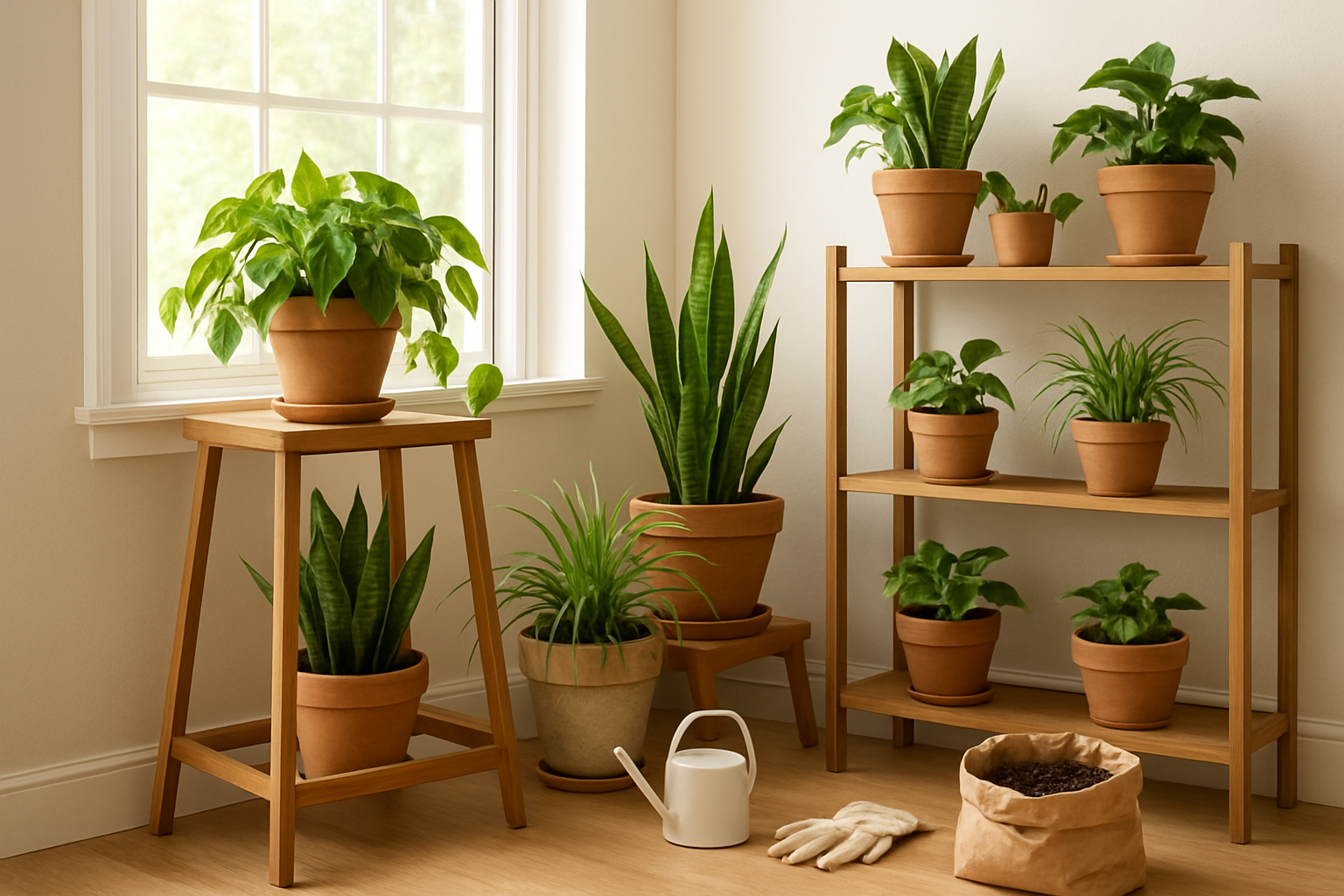
Selecting the Right Pots and Drainage
Choosing the perfect containers makes all the difference when you’re starting your plant journey. Your pots need drainage holes – no exceptions. Water sitting in the bottom turns into a death trap for your plants’ roots, causing rot that kills even the hardiest varieties.
Start with pots that are slightly larger than your plant’s root ball. A good rule is to pick containers 1-2 inches wider than the current pot. Going too big creates soggy soil problems, while too small restricts growth.
Material matters for your success:
- Terracotta pots breathe well and dry out faster – perfect for plants that hate wet feet like succulents
- Plastic containers hold moisture longer, great for plants that like consistent dampness
- Ceramic pots look beautiful but check they have proper drainage holes
Always use a saucer underneath to protect your furniture, but empty it within 30 minutes after watering. Standing water attracts pests and creates humidity problems.
Consider pot depth based on your plant type. Shallow-rooted plants like pothos do fine in wider, shorter containers, while plants with taproots need deeper pots to spread out comfortably.
Best Placement for Plant Success
Light is everything for your green friends. Most of the best indoor plants need bright, indirect light – think of a spot near a window but not directly in the sun’s path.
South-facing windows get the strongest light all day. Perfect for sun-lovers but might be too intense for sensitive plants during peak hours.
East-facing windows offer gentle morning light that most plants absolutely love. This spot works for almost everything.
West-facing windows get intense afternoon sun that can scorch delicate leaves. Great for succulents and cacti.
North-facing windows provide the softest light. Snake plants and ZZ plants thrive here, but flowering plants might struggle.
Watch your plants for signs they’re happy with their location. Leaves reaching toward the light mean they want more brightness. Scorched or faded leaves suggest too much direct sun.
Keep plants away from heat sources like radiators, air vents, and fireplaces. Consistent temperatures between 65-75°F work best for most houseplants. Avoid drafty areas near doors and windows that open frequently.
Group plants together to create a mini ecosystem with higher humidity – they’ll all benefit from the shared moisture.
Building a Watering Schedule That Works
Forget rigid schedules – your plants don’t follow calendars. Learning to read what they need takes time, but it’s easier than you think.
The finger test never fails: stick your finger about an inch into the soil. Dry means water time, moist means wait. Different plants have different preferences, so learn each one’s rhythm.
Create a simple tracking system:
- Check plants every 2-3 days
- Note which ones dry out faster
- Mark watering dates on a calendar or phone app
- Watch for visual cues like drooping or crispy edges
Most beginner plant failures come from overwatering, not underwatering. Yellow leaves often signal too much water, while brown, crispy edges usually mean too little.
Water thoroughly when you do water – until it drains from the bottom holes. This ensures the entire root system gets moisture and flushes out salt buildup from fertilizers.
Morning watering works best because it gives plants all day to absorb what they need and prevents fungal problems that develop in cool, wet conditions overnight.
Season changes affect watering needs dramatically. Plants drink less in winter when growth slows and more in spring and summer during active growing periods. Adjust your checking frequency accordingly.
Use room temperature water when possible – cold water shocks roots and hot water can damage them. Let tap water sit overnight to let chlorine evaporate if your plants seem sensitive.
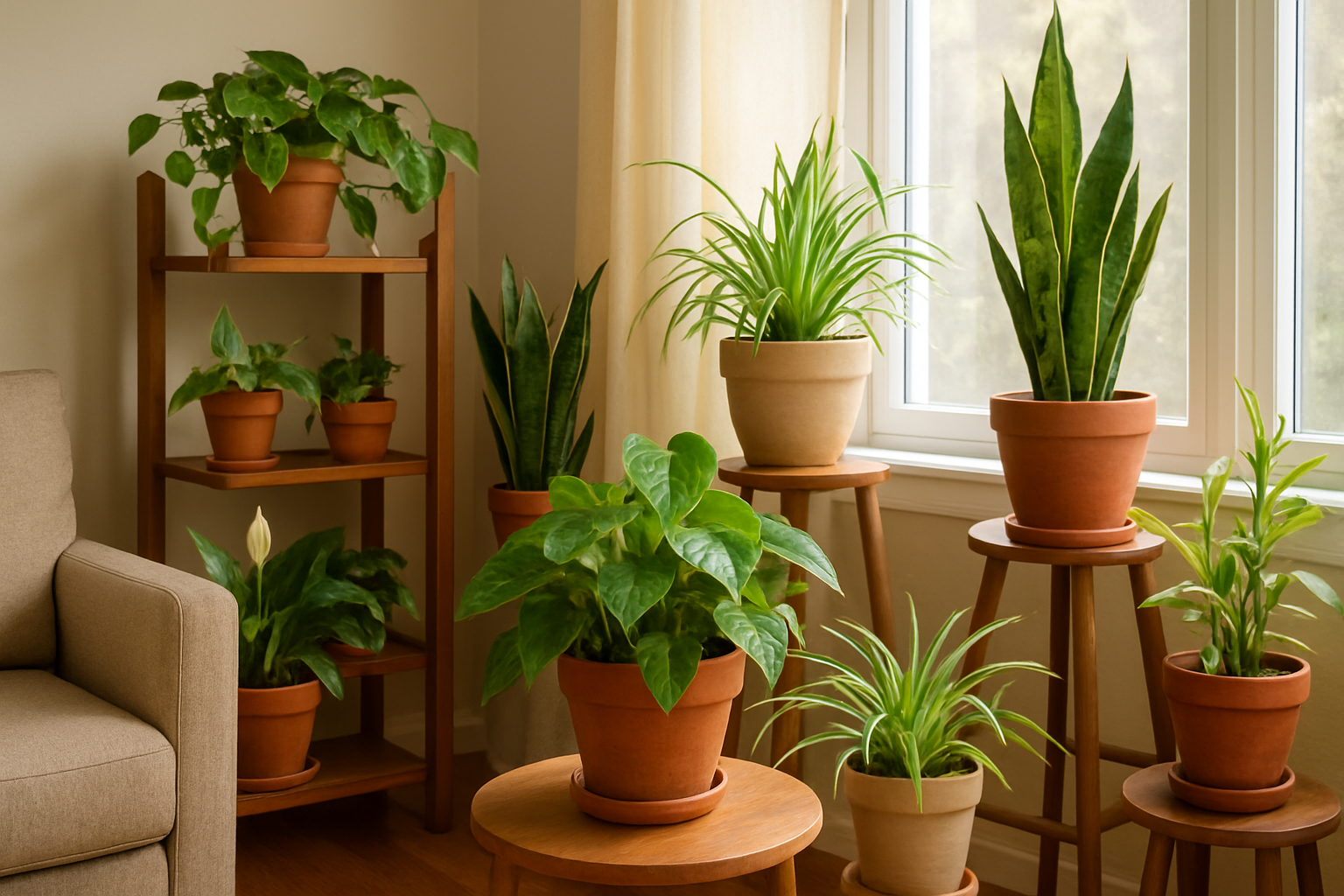
Starting your indoor plant journey doesn’t have to break the bank or stress you out. Snake plants, pothos, and spider plants are perfect first choices because they forgive watering mistakes and grow happily in most lighting conditions. These green friends can transform your space for less than $20 each while you learn the ropes of plant care. Remember to check the soil before watering, place plants where they’ll get appropriate light, and resist the urge to move them around constantly.
The best part about becoming a plant parent is watching your confidence grow alongside your green collection. Start small with one or two easy-care plants, master the basics, and then expand your indoor garden as you discover what works in your space. Your future self will thank you for taking that first step into the rewarding world of houseplants, and your home will feel more alive and welcoming with each new addition.