10 Outfit Formulas That Make Cheap Clothes Look Expensive in 2026
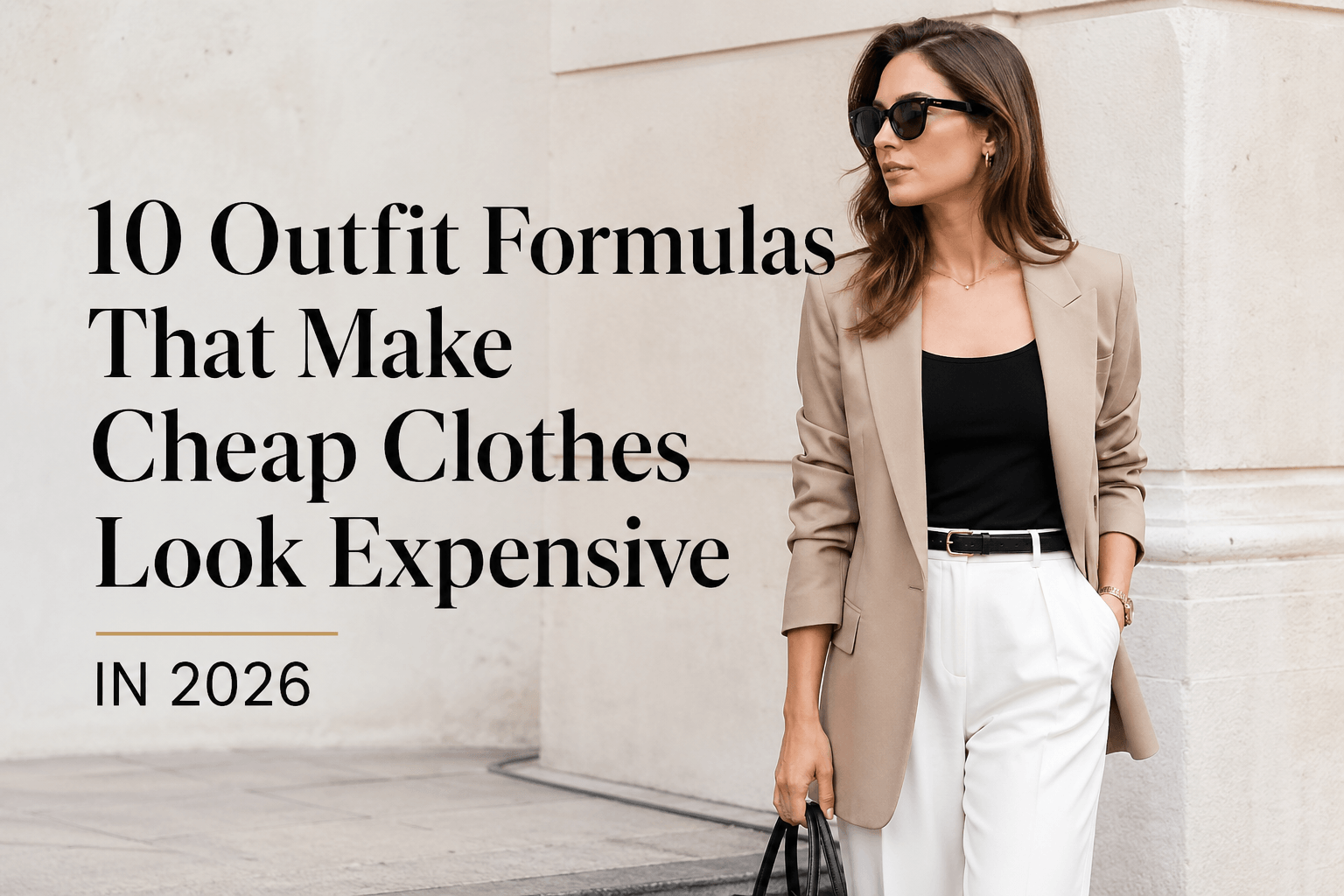
🔑 Quick Answer: Why Cheap Clothes Look Expensive
Cheap clothes look expensive when you nail fit, color harmony, and intentional styling. These 10 outfit formulas use techniques like monochrome dressing, the third piece rule, tonal accessorizing, and smart fabric choices to create a polished, elevated look at any budget. No designer labels required.
You spend money. You follow trends. You copy outfits from Instagram. And somehow, you still walk out looking fine. Not expensive. Not polished. Just fine. Meanwhile, someone in a street market kurta walks by looking like she just stepped off a runway. The difference has nothing to do with how much she spent.
In this guide, you will get 10 specific, repeatable outfit formulas that make cheap clothes look expensive — stylist-approved, zero shopping haul required.
KEY TAKEAWAYS:
1. Fit beats price every single time. A well-fitted budget piece beats an ill-fitting designer one.
2. Monochromatic dressing is the single fastest route to looking more expensive.
3. The “third piece” rule — adding a blazer, belt, or scarf — is what separates a basic outfit from a polished one.
4. Neutral and muted tones hide the fabric imperfections that cheap materials often carry.
5. Accessories do more heavy lifting than the clothes themselves.
6. Wrinkle-free, lint-rolled, and properly cared-for clothes read as expensive at any price point.
Why Do Some People Look Expensive in Cheap Clothes?
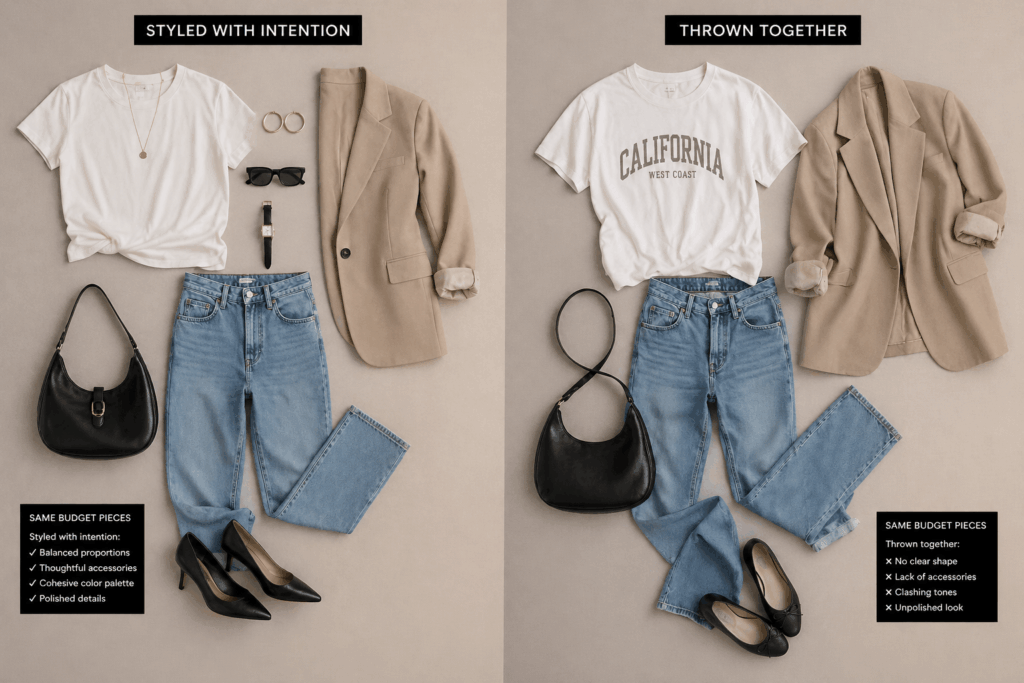
Answer: The “expensive look” comes from three things: fit, intention, and color harmony. It has nothing to do with brand or price tag. Clothes that fit the body correctly, are worn in coordinated combinations, and are wrinkle-free will always read as expensive, regardless of where they were bought.
Most people focus on what they buy. The people who consistently look polished focus on how they wear it. There is a massive difference between those two approaches.
Fit is the biggest signal of all. As Jordanna Sharp, private stylist and founder of Styled By Jordanna, stated in Yahoo Style (February 2026): “Clothes that fit right don’t just look and feel better on — they also look more expensive.
An ill-fitting pant is a telltale sign that the quality is not great and often poorly made. This can affect the look and feel of the entire outfit.” A ₹800 item that fits your body perfectly will always beat a ₹8,000 item that does not.
Posture matters too. Cheap clothes cannot survive bad posture. The same blazer looks completely different on someone who stands tall versus someone who hunches. Good posture is a free styling upgrade most people never claim.
Color is the second biggest signal. Loud prints and clashing colors expose cheap fabric instantly. Neutral and muted tones create a clean visual that hides fabric limitations. Solid colors in camel, cream, black, navy, and white almost always read as more expensive than busy patterns at a budget price point.
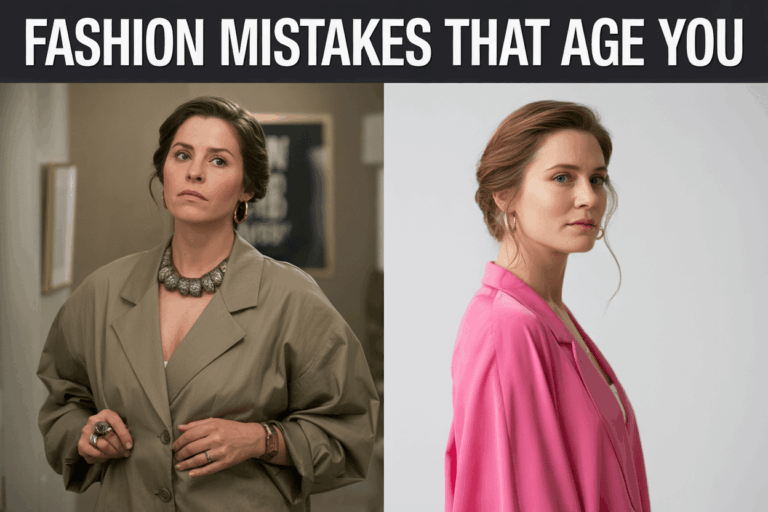
Before adding anything to your wardrobe, it is worth reading about the fashion mistakes that might be quietly working against you. Sometimes looking more expensive is less about what you add and more about what you stop doing.
“Fabric choice and color alone can alter age and wealth perception significantly, before fit or styling are even factored in.” — Fashion Institute of Technology research finding
The next section gives you the single fastest formula to apply right now. No shopping needed.
Formula 1: The Monochrome Neutral
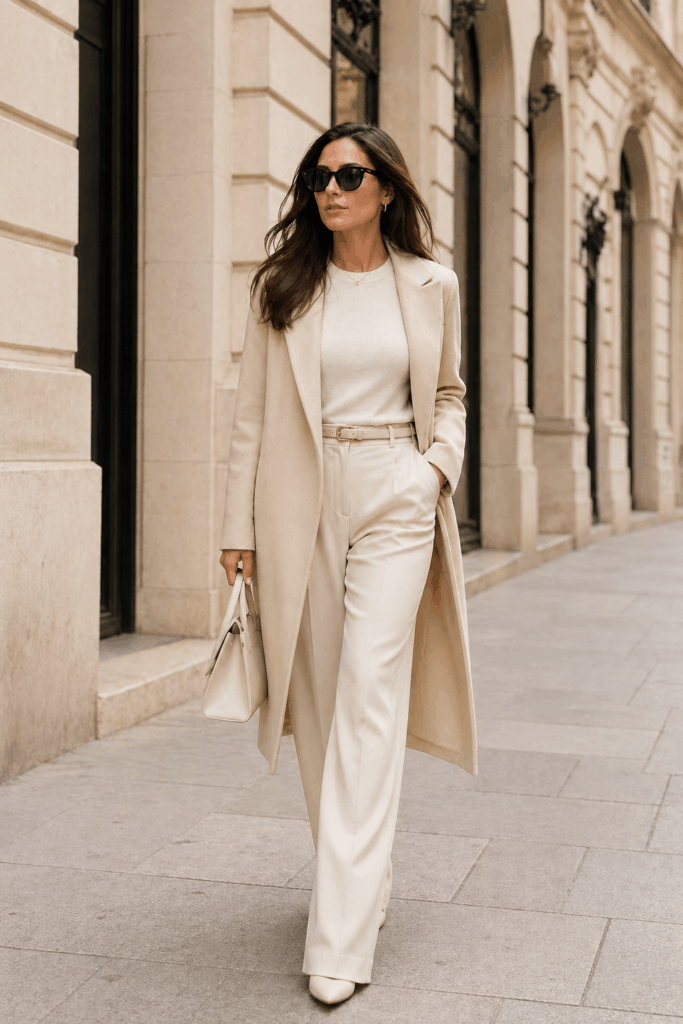
Answer: Wearing one color from head to toe — especially in cream, camel, black, or navy — instantly creates an elongated, editorial silhouette. The eye reads it as intentional and polished. This is the single most recommended formula by stylists for making cheap clothes look expensive, fast.
Monochrome dressing works because the eye is not interrupted by color contrast. Instead of scanning up and down across different shades, the eye travels in one smooth, unbroken line from top to bottom. That single line signals “expensive” whether you spent ₹500 or ₹50,000 on the outfit.
According to Who What Wear’s styling team, monochromatic ensembles — especially all-white or all-cream outfits — automatically look more expensive. They recommend mixing shades of cream, white, and beige within one outfit for a layered, luxe effect that avoids looking flat or costume-like.
The key is mixing textures within one color family. A cream knit top paired with straight-leg cream trousers and nude loafers creates incredible depth. The matte knit against the smooth trouser fabric tells the eye there is detail and thought here. Add a cream satin bag and the outfit photographs like a designer lookbook.
Budget formula to try:
- Cream ribbed top
- Cream straight-leg trousers
- Nude block-heel loafers
- Tan tote bag
One warning: avoid perfectly matching pieces in cheap fabrics. Slight tonal variation between pieces looks intentional. Exact matches in polyester can read as a costume.
The third piece rule in the next formula takes any outfit — including a monochrome one — from good to genuinely polished.
Formula 2: The Blazer Effect and the Third Piece Rule
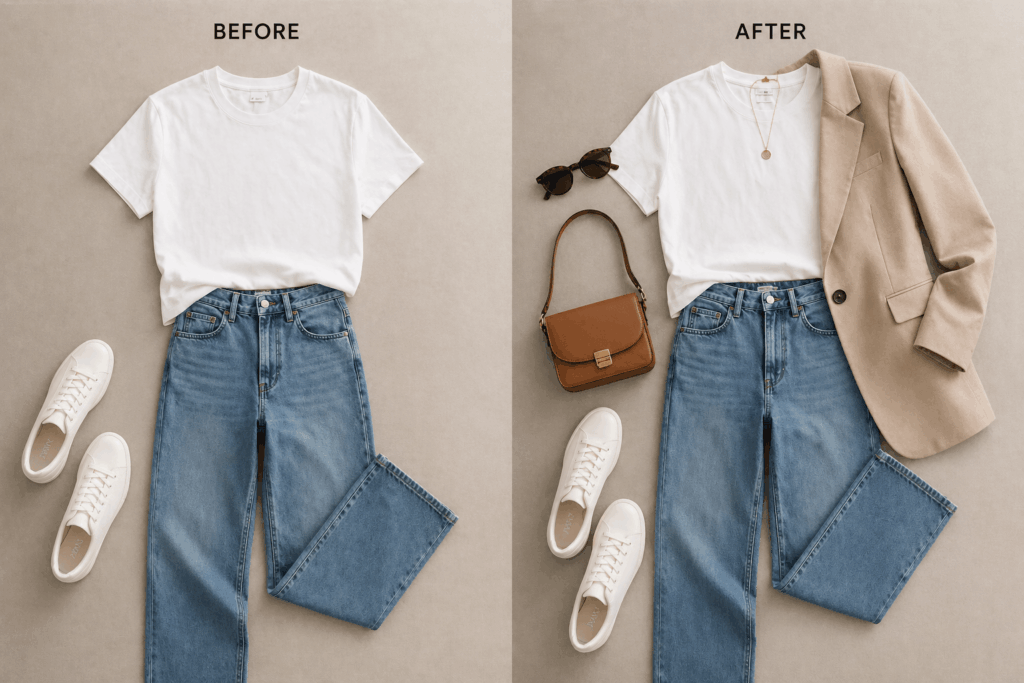
Answer: Adding a blazer, structured cardigan, or belt as a “third piece” over any basic outfit is the fastest single styling trick to look more expensive. It signals structure and intention — the two things cheap outfits usually lack — and one layered piece fixes both instantly.
The third piece rule is simple. Any outfit that feels incomplete gets elevated by adding one structured layer or accessory on top. A basic tee and jeans is an outfit. A basic tee, jeans, and a blazer is a look. Same budget. Completely different perception.
As Jordanna Sharp explains in Yahoo Style (February 2026): “The third piece makes an outfit look intentional, polished and refined. It reinforces that you have dressed with intention.” That is exactly what cheap clothes need: one visible signal of intention.
A blazer is the most powerful third piece because it adds structure to any silhouette instantly. You do not need to spend much. A well-cut blazer from Zara, Mango, or H&M does exactly the same job as a designer one when the fit is right. Even a thrift store blazer in a neutral color transforms an outfit entirely.
Budget formula to try:
- White tee
- Straight dark jeans
- Neutral blazer (worn or draped over shoulders)
- Loafers or block heels
The belt variation works equally well. Cinching a loose dress or oversized blazer at the waist with a quality belt creates shape and intention from nothing. A silk or satin scarf tied at the neck or looped on a bag handle is the quickest single-item upgrade you can make.
Formula 3 is the specific three-piece combination that stylists describe as the uniform of people who have nothing to prove.
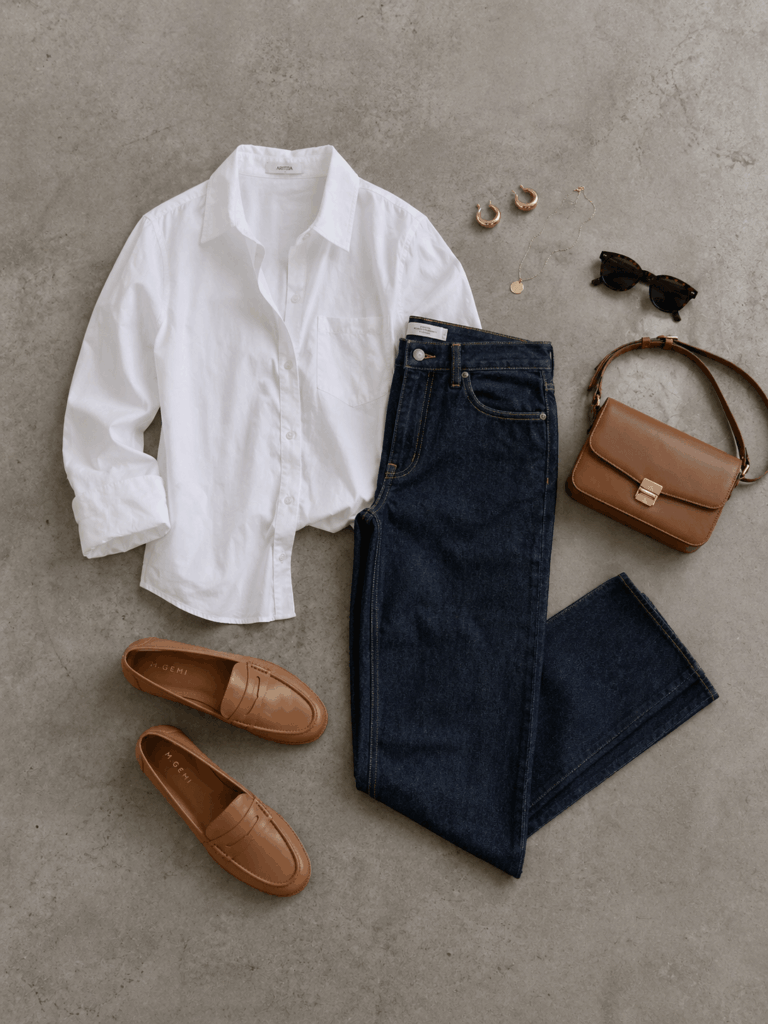
Formula 3: White Shirt, Dark Denim, Leather Loafers
Answer: A crisp white button-down tucked into dark straight-leg jeans, finished with leather or faux-leather loafers, is the uniform of understated style. This three-piece combination creates clean lines and a polished contrast that reads as expensive at every price point. No accessories needed.
The reason this formula works is contrast and simplicity. White against dark denim creates a clean vertical line. The loafer keeps the silhouette streamlined. Together, the three elements eliminate everything that reads “cheap”: mismatched colors, sloppy proportions, and rushed dressing.
The half-tuck is the magic move here. Push only the front third of the shirt loosely into the waistband. Off-center. Not perfectly positioned. This creates drape that looks accidental but sophisticated. According to Vegoutmag’s styling feature (2025), one stylist watched someone do this exact move with a $12 T-shirt and jeans — three different people asked where the outfit was from. The shirt had not changed. The proportion had.
Bottom line: proportion is the hidden language of expensive dressing. Change the proportion, change the perception.
Dark denim reads more expensive than light denim at a budget price point because it hides fabric inconsistencies and creates a cleaner line. Avoid whiskering or distressing on budget jeans. The simpler the jean, the more expensive it looks.
For budget-friendly white shirts and brands that actually hold their shape after washing, the full guide to 15 best affordable fashion brands that look expensive is the right place to start.
Formula 4 works hardest for the least effort. One coat does everything.
Formula 4: The Camel Coat Formula
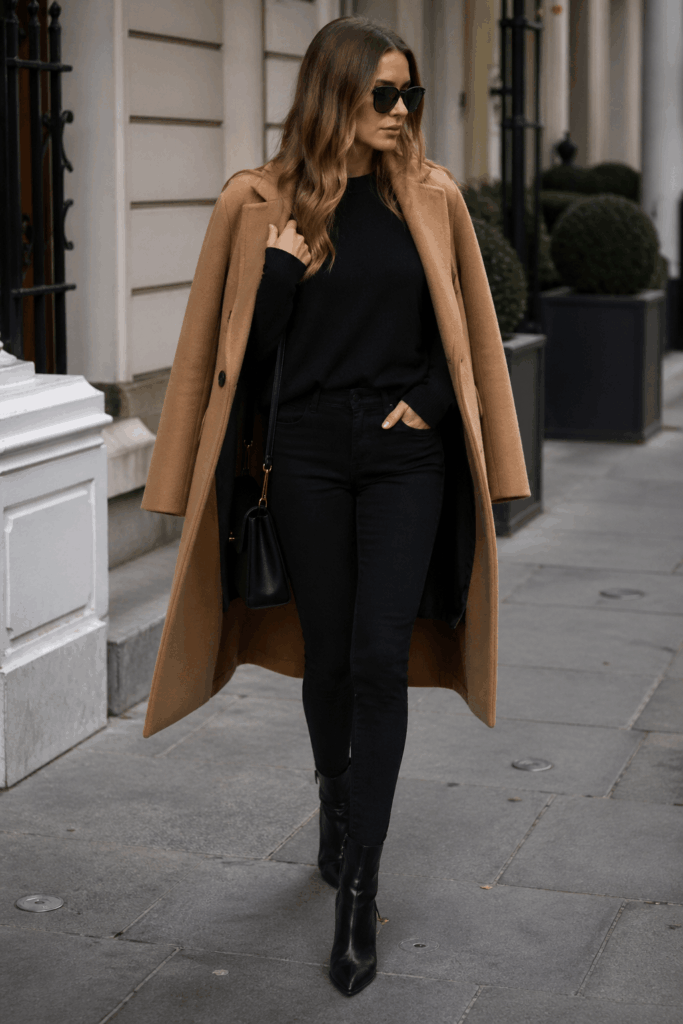
Answer: A camel coat worn over an all-black outfit is one of the most powerful expense-signaling combinations in fashion. The contrast between warm camel and sleek black creates instant sophistication. The coat does all the heavy lifting, even when everything underneath is from a budget store.
Camel and black never looks cheap. The warmth of camel against the depth of black creates a visual balance that photographs beautifully and reads as polished in person. This combination consistently appears on the most stylish women across every budget level.
According to the styling analysis published by Chic Style Collective (March 2026), a structured coat pulls everything together and elevates even the simplest outfits underneath. A well-cut coat is one item worth spending slightly more on, or hunting for at a thrift store, because it transforms every outfit it covers.
The drape trick elevates this formula further. Instead of wearing the coat normally, drape it over your shoulders without putting your arms through the sleeves. This styling move turns the coat into an accessory. It signals confidence. It makes even a basic peacoat look intentional.
Budget formula to try:
- Black ribbed turtleneck
- Black straight trousers
- Thrift store camel coat (draped over shoulders)
- Black ankle boots
That ankle reveal between the boot and trouser hem is deliberate. A strip of ankle makes the whole silhouette look longer and more considered.
Most people overlook the formula in the next section. It is completely free and delivers one of the biggest visible upgrades on this entire list.
Formula 5: Matching Accessories — The Bag-Belt-Shoe Trio
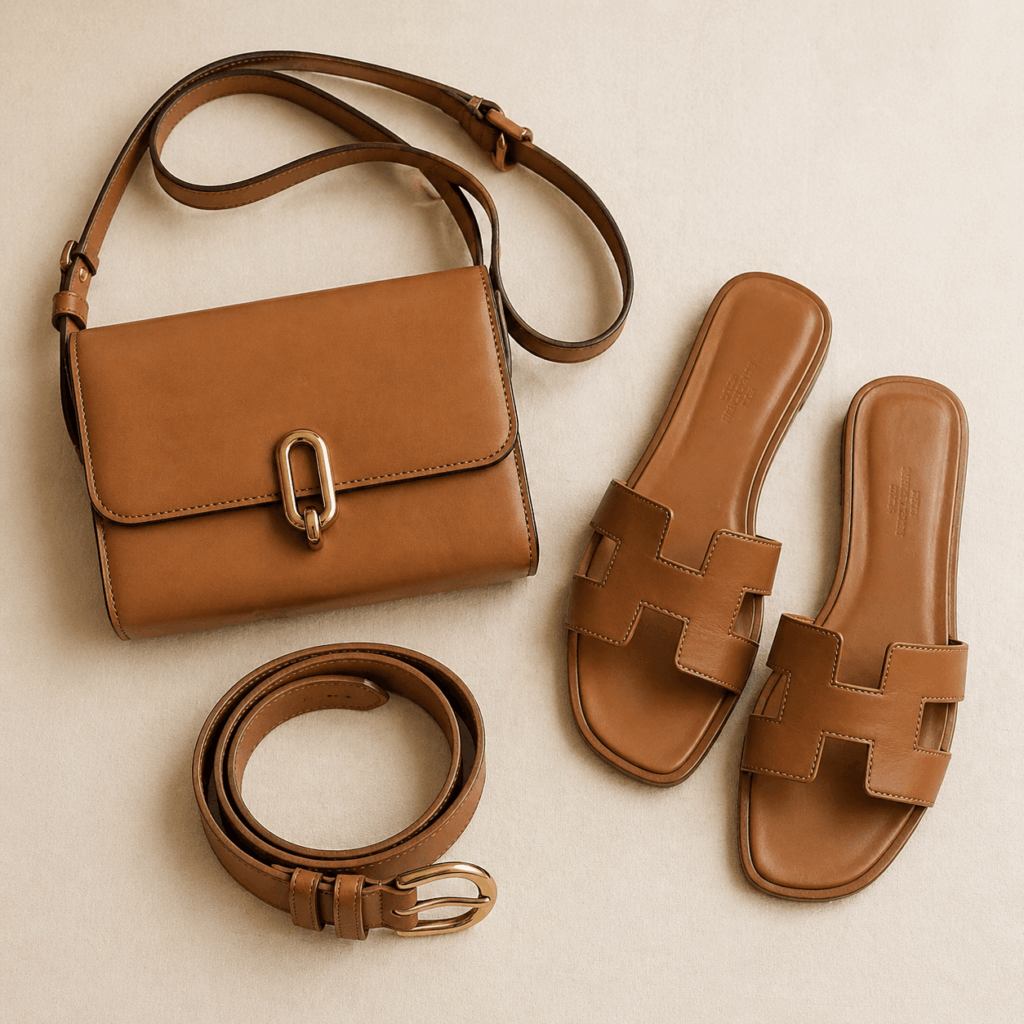
Answer: Coordinating your bag, belt, and shoes in the same tone is one of the most underused tricks for making cheap clothes look expensive. It creates a finished, intentional look that signals styling awareness — which reads as expensive regardless of what each piece actually cost.
Most people mix accessories without thinking about tone. That is the exact habit that makes an otherwise nice outfit look unfinished. When your shoes, belt, and bag speak the same tonal language, the outfit feels considered and complete.
As Jordanna Sharp states in Yahoo Style (February 2026): “If you have a shoe color in your closet that you love, it’s worth having the matching bag or belt color. It reinforces that you have dressed with intention, making the look feel more polished and refined.”
Gold tone accessories are a reliable shortcut. Gold hardware on a bag, a gold-tone belt buckle, and simple gold hoop earrings create a cohesive, expensive-looking finish across any outfit. Gold reads as elevated across price points in a way that mixed metals simply do not.
A structured bag with clean lines and minimal hardware is the single accessory that does the most work. You do not need to spend much, but avoid bags with visible cheap plastic hardware or irregular shapes. Clean lines signal expensive. Our full guide to budget accessories that elevate any outfit covers exactly what to look for when shopping affordable.
Texture matching takes this even further: a tan suede loafer with a tan leather belt and a tan croc-pattern bag creates depth that looks genuinely curated.
The next formula costs exactly nothing and works on clothes you already own today.
Formula 6: The French Tuck and the Rolled Sleeve
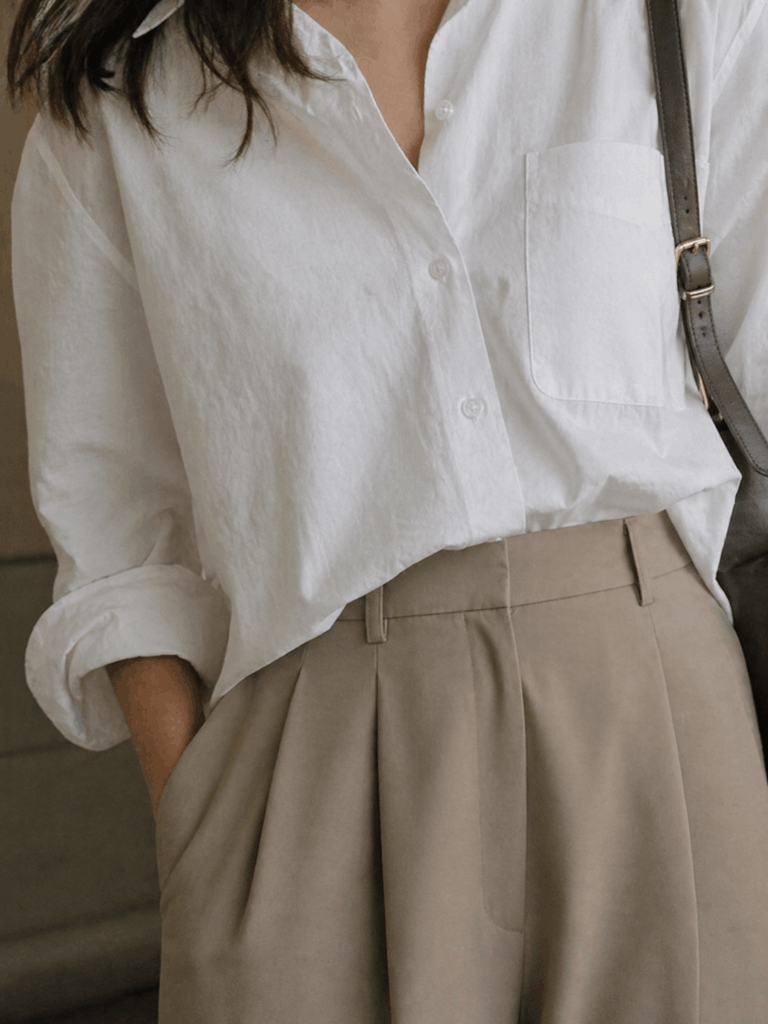
Answer: Two micro-styling moves — the partial front tuck and the double-rolled sleeve — transform the proportions of any outfit without spending a single rupee. These small adjustments signal that you dressed with intention. Proportion is the hidden language of expensive dressing, and these two moves speak it fluently.
The French tuck: Take the front third of your shirt and push it loosely into your waistband. Do not center it perfectly. Do not tuck the whole shirt. Just the front, casually, as if you half-tucked it on your way out. This creates drape that defines the waist, makes budget fabric fall better, and gives the impression that you dressed with thought. Works with T-shirts, button-downs, and oversized sweaters.
The double sleeve roll: Roll your sleeve to mid-forearm in two folds. First roll to mid-forearm, second fold back over itself creating a thick, clean cuff that stays in place. Polished-casual. Deliberately styled.
The collar pop: Slightly lifting the collar on a blazer or button-down adds structure to your silhouette and makes even the cheapest blazer look like it has body.
According to Vegoutmag’s styling feature, one writer started wearing her $30 blazer with the collar slightly lifted and her manager commented she looked more put-together. Same blazer. Different collar.
Nothing in your closet changed. Your perception of it did.
Formula 7 is about one fabric category that photographs like designer regardless of what you paid.
Formula 7: Silk and Satin Fabrics at Any Price Point
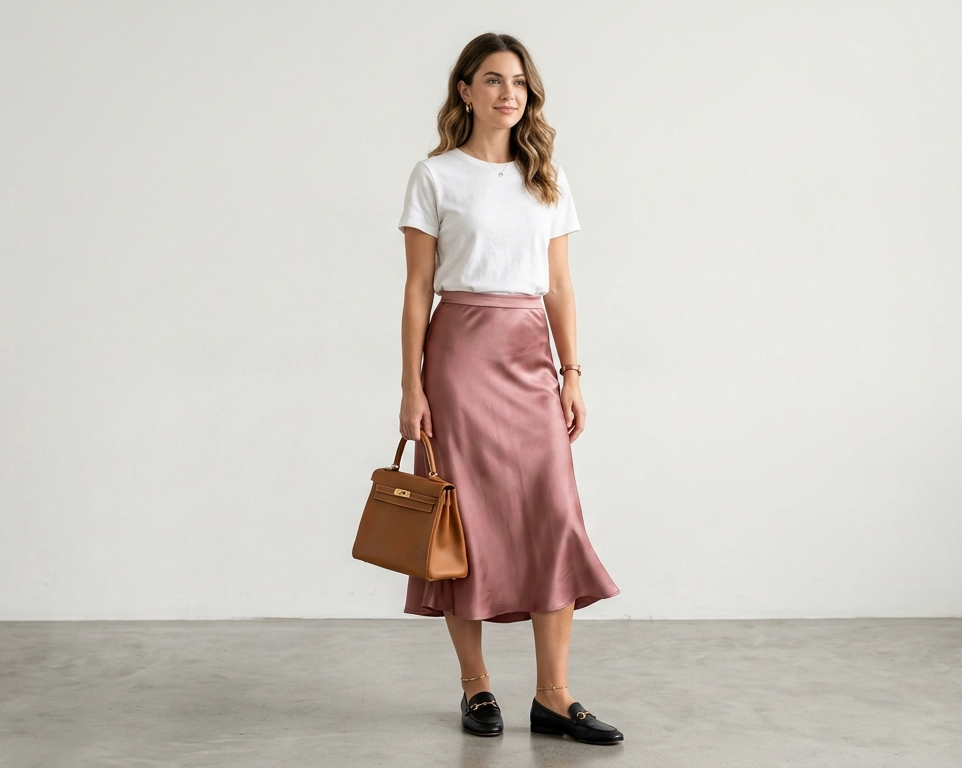
Answer: Silk and satin have a natural light-catching quality that photographs beautifully and reads as expensive regardless of actual cost. A satin midi skirt from a budget store, paired with a simple top and clean accessories, will consistently be mistaken for something designer. Fabric choice is the most underrated shortcut for making cheap clothes look expensive.
Certain fabrics carry an inherent perception of luxury. Satin and silk are at the top of that list. The way they catch light, drape over the body, and move when you walk signals quality to the eye before anyone checks a label or asks a price.
According to Who What Wear’s styling team, silk and satin fabrics “have a luxurious quality to them that makes them appear more pricey than they tend to really be.” Budget satin pieces, especially midi skirts, cami tops, and simple blouses, are among the most effective purchases you can make for a polished wardrobe at low cost.
The 2026 trend data backs this up fully. According to Google Trends (2026), search interest in “silk scarf” hit an all-time high this year, with “silk scarf top” reaching a 10-year search peak. Budget satin pieces will read as very current in 2026, not dated.
How to style satin without looking overdressed: keep everything else muted and simple. A satin midi skirt works best with a plain white or cream tee tucked in, a structured bag, and flat loafers. The satin does the talking. Let it.
What to avoid: cheap satin with visible sheen distortions or a stiff, plasticky hand feel. Good budget satin has fluid drape. Stiff satin reads as cheap even when the idea is right.
The silk scarf trick deserves its own mention. Tie a silk or satin scarf on your bag handle, at your neck, or through belt loops. One accessory. Instant luxury.
Formula 8 requires the least styling knowledge and delivers the most complete-looking result of anything on this list.
Formula 8: The Monochrome Suit Co-ord
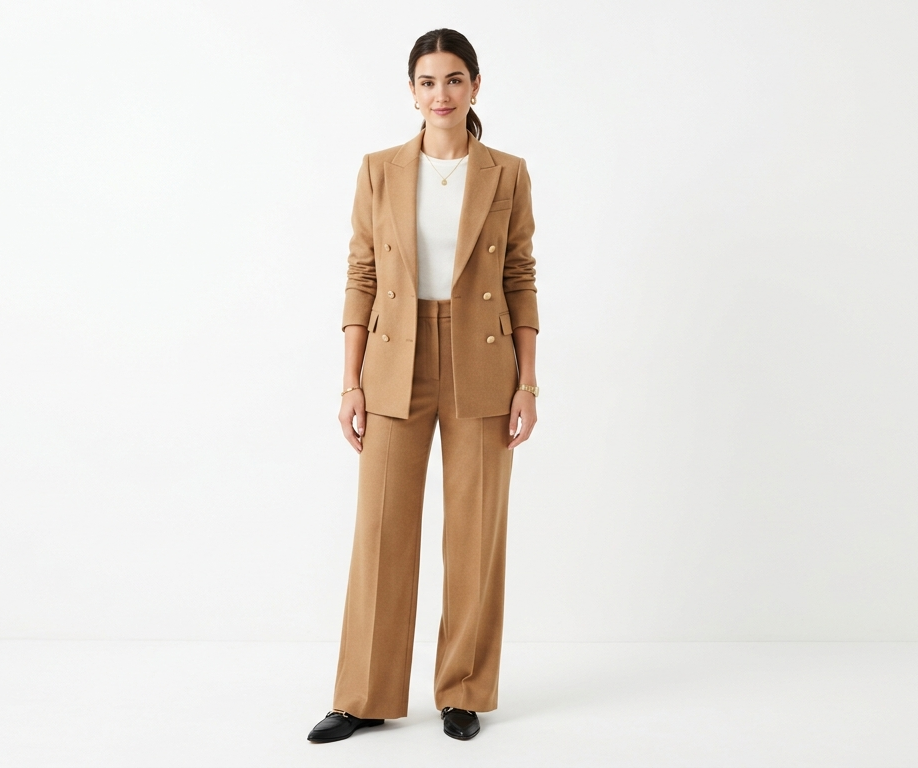
Answer: Wearing a matching co-ord set — blazer and trousers, or blazer and skirt in the same fabric — is one of the highest-impact, lowest-effort formulas for looking expensive. A matching set automatically reads as intentional and polished, even when both pieces come from a budget retailer.
The reason co-ords and suit sets look expensive is simple: they look designed to be worn together. There is no guesswork, no clash, no visual noise. The eye reads “this person put thought into this outfit” before any other detail registers.
According to 2026 capsule wardrobe guidance from Alisonsnotebook.com, the trend for 2026 blazers is fitted and buttoned-up rather than oversized. This fitted approach is ideal for the co-ord formula because it creates a structured, polished silhouette at any budget.
Color choice matters a lot here. Neutral tones work best: black, camel, cream, navy, and warm grey. Bold co-ords in cheap fabrics can read as costume-like. Stick to tones that are universally flattering and slow to date.
The belt cinch: Wearing the blazer open over the matching trouser and cinching it at the waist with a thin quality belt creates a more feminine, editorial shape. You go from “matching set” to “intentional look” with one belt.
Where to find budget co-ords in India: Zara, Mango, H&M, and several Indian direct-to-consumer brands stock affordable suit sets that hold their shape well after washing.
Formula 9 is the classic combination every French stylist swears by — and it works just as well on a street market budget.
Formula 9: The Stripe, Dark Denim, and Tan Accessories Formula
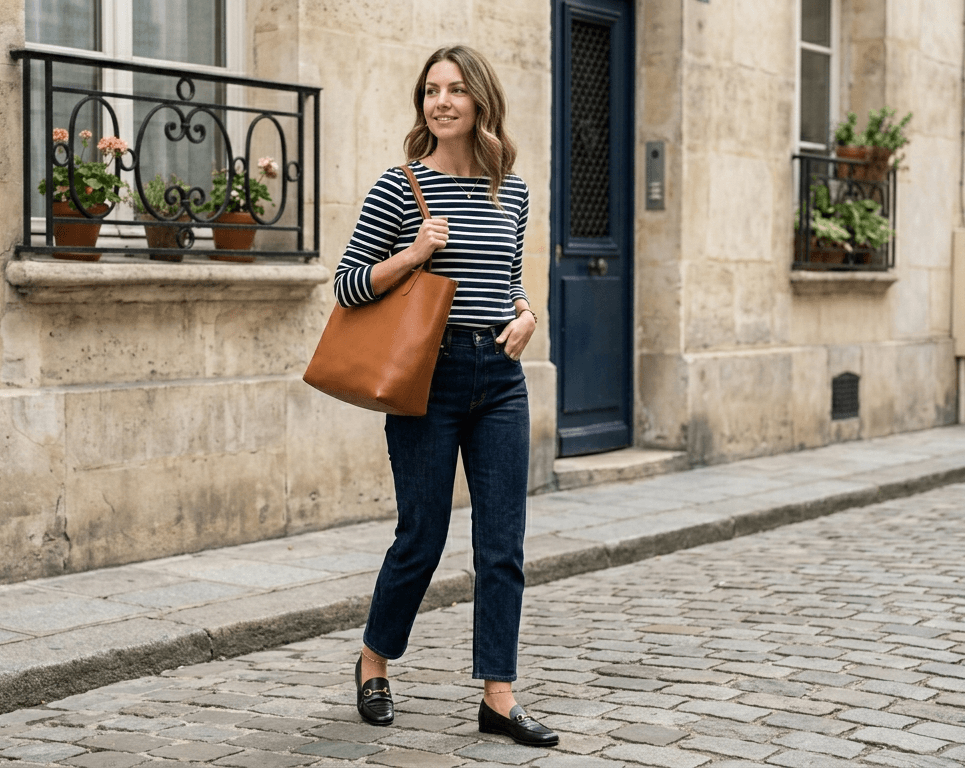
Answer: Classic horizontal stripes paired with dark straight denim and matching tan accessories create a timeless French-girl look that never reads cheap. The simplicity signals effortlessness. In 2026, effortlessness is the ultimate luxury signal.
The French-girl aesthetic has stayed consistently aspirational for one reason: it is built on restraint, not spending. The combination of stripes, dark denim, and neutral accessories is instantly recognizable as “chic” across cultures and decades.
The exact formula:
- Navy or black Breton stripe top
- Dark straight-leg jeans
- Tan loafers or white sneakers
- Tan tote or crossbody bag
- One minimal gold accessory (thin hoop earring or simple bracelet)
Stop there. The tan accessories are the secret ingredient. A tan belt matched to a tan bag keeps the color story simple and ties the look together in a way that feels like it cost far more than it did.
What not to do: do not add too many accessories or mix competing tones. Adding a colorful scarf, bold jewelry, and a logo bag all at once kills the effortless effect entirely.
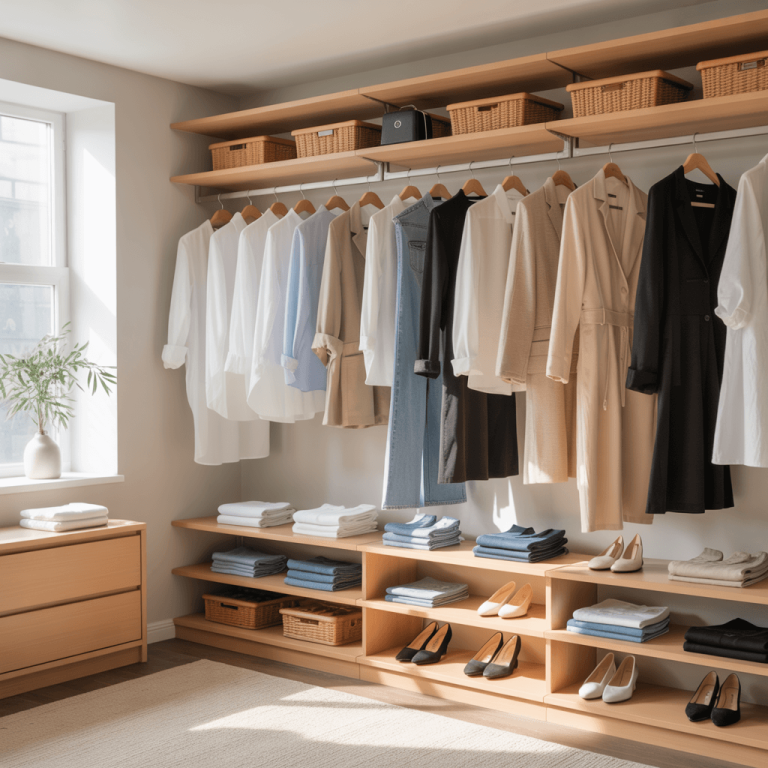
If this formula makes you want to rethink your whole wardrobe approach, the guide on how to build a capsule wardrobe walks through exactly how to build a small collection of pieces that all work together like this.
Formula 10 is the one most people completely ignore. It costs almost nothing. And it changes everything.
Formula 10: Garment Care as a Styling Tool
Answer: Wrinkled, pilled, or lint-covered clothes look cheap at any price point. The fastest way to make cheap clothes look expensive is to keep them immaculate. Garment care is a free styling upgrade that most people skip entirely, and it changes the perceived value of every item you own.
This formula requires no shopping. No styling knowledge. No budget.
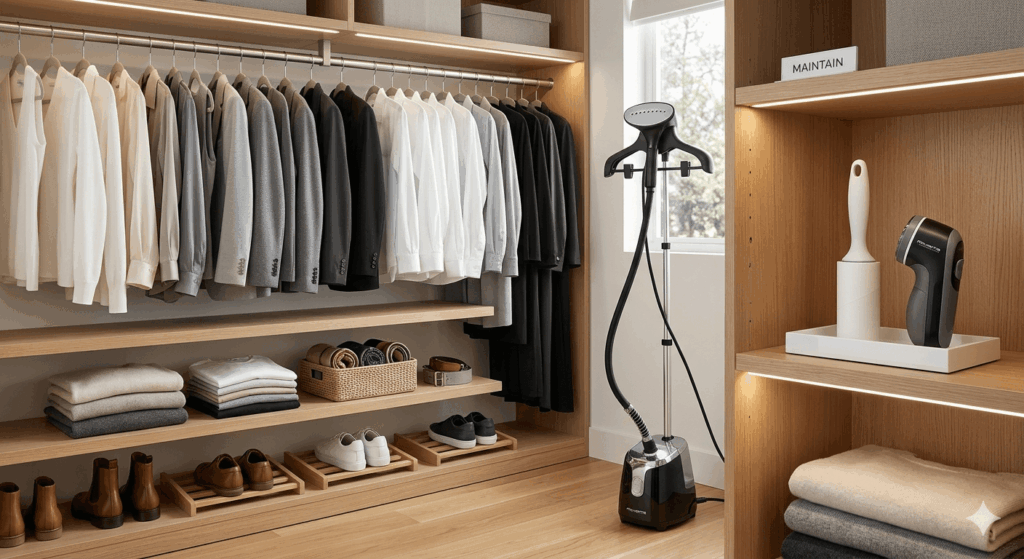
Wrinkles are the number one enemy. A wrinkled shirt in expensive fabric looks cheaper than a smooth shirt in budget polyester. According to Fashion Googled’s 2026 style guide, wrinkled clothes instantly look cheap and signal a lack of attention to detail. A garment steamer costs under ₹1,500 and is the single best investment you can make for your wardrobe this year.
Pilling destroys perceived quality. A fabric shaver removes the small fibre balls that form on knitwear and cheaper fabrics after washing. Five minutes with a fabric shaver makes an old sweater look completely new.
The lint and thread check: before leaving the house, do a quick once-over. Snip loose threads (never pull them). Roll lint and pet hair off dark fabrics. These checks take two minutes and add significant points to how expensive your outfit reads.
Proper storage extends everything:
- Padded hangers for delicate pieces
- Folded knitwear (hanging stretches it out of shape)
- Garment bags for coats in warmer months
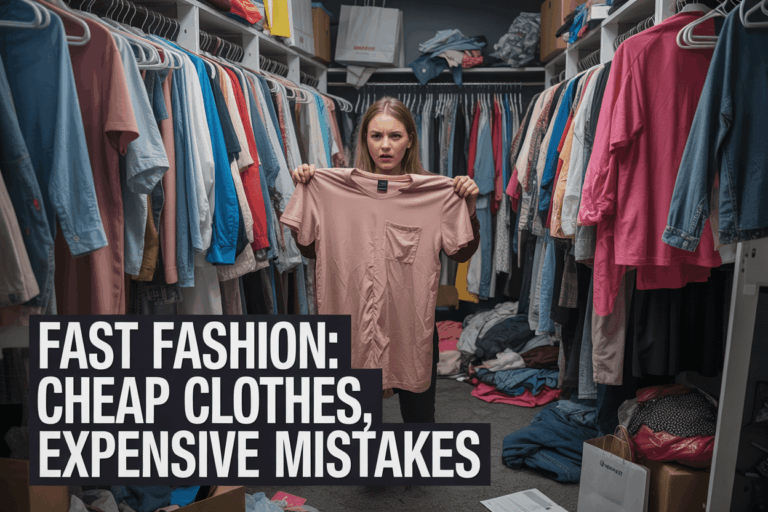
Understanding why fast fashion construction shortcuts make garment care harder is worth reading in full. Our article on why fast fashion is destroying your style and wallet covers exactly what to avoid when building a wardrobe meant to last.
10 Outfit Formulas Compared: Quick Reference Table
| Formula | Key Pieces | Budget Level | Best Occasion |
|---|---|---|---|
| Monochrome Neutral | Same-color separates in cream, camel, or black | Low | Daily wear, work, events |
| The Blazer Effect | Blazer, belt, or scarf as third piece | Low-Medium | Any occasion |
| White Shirt + Dark Denim | Button-down, straight jeans, loafers | Low | Casual to smart casual |
| Camel Coat Formula | Camel coat + all-black base | Medium (coat only) | Fall, evenings, winter |
| Matching Accessories Trio | Bag + belt + shoes in the same tone | Low | Elevating any outfit |
| French Tuck + Rolled Sleeve | Any top + trousers | Zero cost | Everyday basics |
| Satin or Silk Pieces | Satin skirt, silk blouse, or silk scarf | Low | Evening, dates, weekends |
| Monochrome Suit Co-ord | Matching blazer + trouser or skirt | Medium | Work, events, brunches |
| Stripe + Dark Denim + Tan | Breton top, dark jeans, tan accessories | Low | Weekends, casual outings |
| Garment Care Formula | Steamer, fabric shaver, lint roller | Very Low | Making any outfit look fresh |
Frequently Asked Questions
Conclusion
Looking expensive has never been about spending more. These 10 outfit formulas that make cheap clothes look expensive prove that styling knowledge, proportion awareness, and a little garment care will always outperform a bigger budget.
The monochrome neutral, the blazer effect, the French tuck, and the matching accessories trio are all free or near-free to apply right now using what you already own. Add one or two budget satin pieces and a good camel coat and you have a wardrobe system that consistently reads as polished, whether you spent ₹500 or ₹5,000.
Start with one formula this week. Pick the one that feels most natural for how you already dress, apply it, and notice what changes. The goal is not a total wardrobe overhaul. It is a smarter way to use what you have.
In 2026, frugal chic is not a compromise. It is a skill. And now you have it.