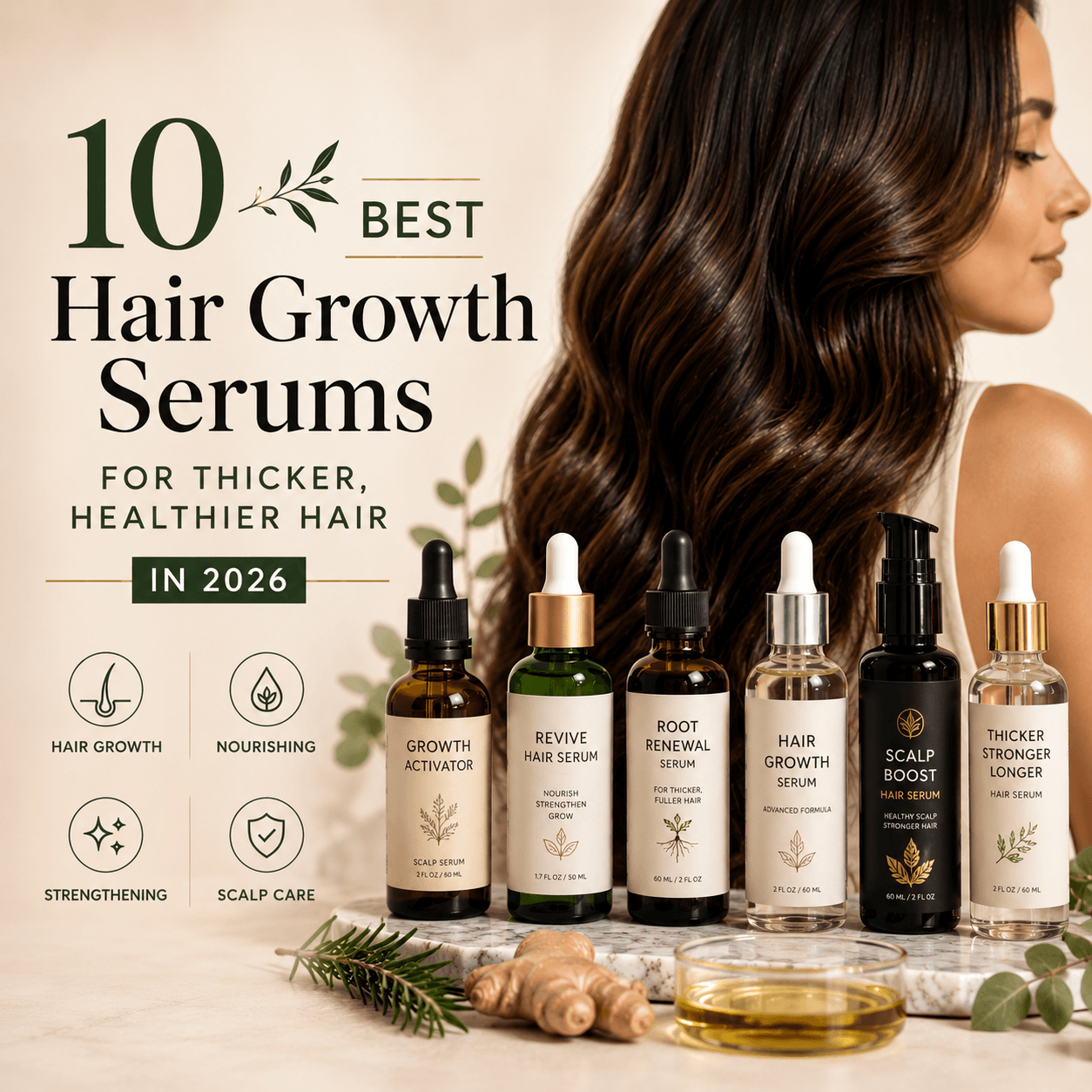
10 Best Hair Growth Serums for Thicker, Healthier Hair in 2026
Quick Answer
The best hair growth serums for 2026 combine clinically studied actives like minoxidil, peptides (Redensyl, Procapil, Capixyl), caffeine, and saw palmetto to support scalp health and follicle activity. Top picks include Vegamour GRO Serum, The Ordinary Multi-Peptide Serum, Women’s Rogaine 2% Minoxidil, and Briogeo Scalp Revival. Most users see reduced shedding by 8 to 12 weeks and visible new growth by 16 to 20 weeks.
You find more hair in the shower drain than usual. You notice your part looking a little wider in photos. And somewhere between panic and denial, you start Googling at 11pm. Here is the thing nobody tells you upfront: according to Forhers’ 2025 survey of 7,100 people, nearly one-quarter of women aged 18 to 65 say their hair has gotten thinner, outpacing the rate reported by men in the same age range. You are not imagining it, and you are definitely not alone. This guide breaks down the 10 best hair growth serums of 2026, what the actual research says about each active ingredient, and exactly how to choose between them based on your hair loss type and budget.
KEY TAKEAWAYS
1. According to the NCOA (2025), 85% of men and 33% of women will experience some form of hair loss during their lifetime.
2. Topical peptide serums (Redensyl, Procapil, Capixyl) work locally at the follicle without minoxidil’s potential side effects, according to board-certified dermatologists interviewed by CNN Underscored (January 2026).
3. A randomized controlled trial found a combination of Redensyl, Capixyl, and Procapil produced a significantly higher researcher-rated improvement score (64.7%) compared to 5% minoxidil alone (25.5%), according to a study published in PMC.
4. Minoxidil remains the single most evidence-backed topical hair loss treatment, with over 40 years of published clinical data.
5. Most hair growth serums need 8 to 12 weeks to reduce shedding and 16 to 20 weeks to show visible new growth. Quitting before 16 weeks is the most common reason people think a product “did not work.”
6. Dr. Michelle Henry, board-certified dermatologist, has stated publicly that Redensyl shows results “similar to minoxidil, without the irritation, without the excess hair growth.”
What Actually Causes Hair Loss, and Can a Serum Fix It?
Hair loss has multiple causes, including genetics (androgenetic alopecia), hormonal shifts, stress, postpartum changes, and nutritional deficiencies. Hair growth serums cannot reverse genetic baldness completely, but they can slow shedding, extend the hair growth phase, and visibly improve density when used consistently and matched to the underlying cause.
Genetics is the single biggest driver of hair loss for most people. According to the American Hair Loss Association, male pattern baldness, or androgenetic alopecia, accounts for approximately 95% of all hair loss cases in men. For women, the pattern looks different: rather than developing distinct bald patches, women typically experience diffuse thinning across the scalp and a widening part, with female pattern hair loss affecting around 40% of women over their lifetime.
Hormones, stress, and life events also play an outsized role, particularly for women. According to a UK survey from Gerrard International cited by Chemist4U (2026), 75% of women reported experiencing hair loss or thinning, with half citing stress and anxiety as a contributing cause and just under a quarter citing postpartum hair loss specifically.
“Hair loss doesn’t just affect men. It’s actually more common in women than many people realise, and it can happen at any age. It can also be triggered by life events, such as pregnancy or menopause.” — Ayesha Bashir, Prescribing Pharmacist at Chemist4U (2026)
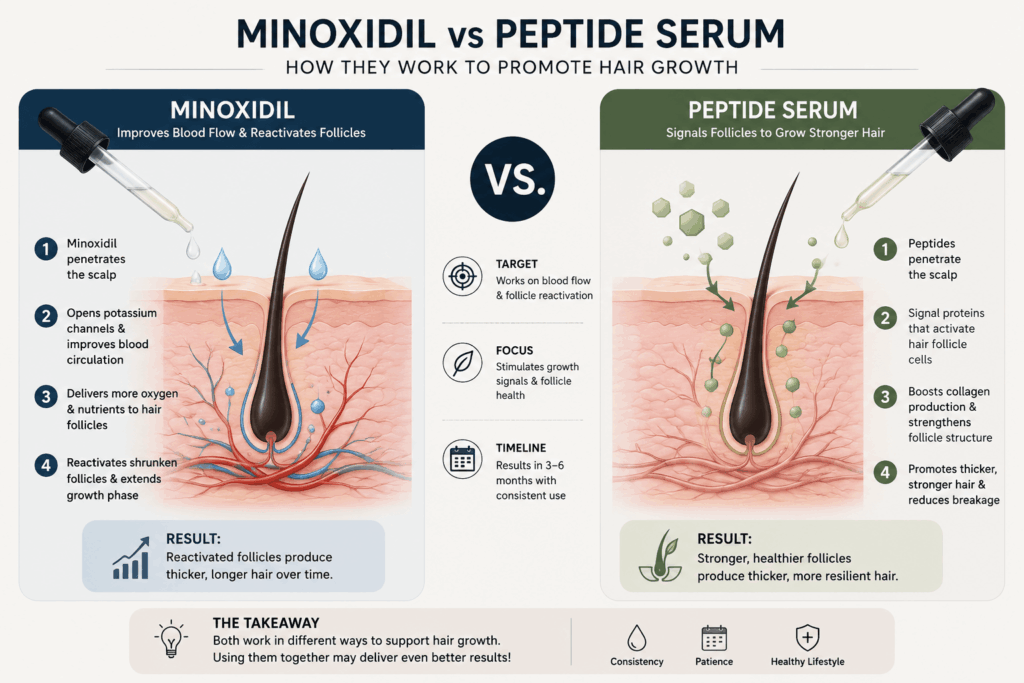
Hair growth serums work through a few different mechanisms depending on their active ingredients. Minoxidil increases blood flow to the follicle and extends the hair’s growth phase. Peptide actives like Redensyl and Procapil target dermal papilla cells and stem cell activity at the follicle level. DHT-blocking ingredients like saw palmetto and caffeine interfere with the hormone responsible for shrinking follicles in androgenetic alopecia.
No serum regrows hair from a fully dormant, scarred, or permanently closed follicle. But for follicles that are still active and simply shrinking or shedding, the right serum used consistently produces measurable improvement.
For a broader look at building healthy hair habits beyond serums, our complete natural hair care routine guide covers the daily and weekly practices that support whatever serum you choose.
Image Suggestion: A simple diagram showing a healthy hair follicle versus a shrinking follicle affected by DHT, with labels for the growth and resting phases.
Now that you understand what is actually happening at the follicle level, here is how to choose between the two main categories of serum on the market.
Minoxidil vs Peptide Serums: Which Type Should You Choose?
Minoxidil is the most clinically proven topical hair loss treatment, with over 40 years of published research and FDA approval for androgenetic alopecia. Peptide-based serums (Redensyl, Procapil, Capixyl) are gentler alternatives that work directly at the follicle without minoxidil’s potential scalp irritation or unwanted facial hair growth, making them a strong option for people who cannot tolerate minoxidil.
According to Dr. Alan Bauman, board-certified hair restoration physician, quoted by the NCOA (2026): drug-free serums that “use evidence-based actives, saw palmetto, caffeine, green tea extract, peptides like biotinoyl tripeptide-1 or GHK-Cu, niacinamide, support scalp health, calm inflammation, modulate DHT at the scalp level, and create the optimal environment for the follicles you still have.”
The clinical evidence comparing the two approaches is genuinely encouraging for peptide-based options. A randomized controlled trial comparing a combination of Redensyl, Capixyl, and Procapil against 5% minoxidil solution in 106 adult male patients with androgenetic alopecia found the combination treatment group achieved a significantly higher researcher-rated improvement score (64.7%) compared to the minoxidil group (25.5%), based on photographic evaluation over 24 weeks.
When minoxidil makes more sense:
- You have moderate to advanced androgenetic alopecia
- You want the treatment with the longest clinical track record
- You are comfortable with potential side effects like scalp irritation or initial shedding
When a peptide serum makes more sense:
- You experienced irritation or did not tolerate minoxidil previously
- Your hair loss is mild to moderate, or you want to prevent further thinning
- You want a gentler entry point into hair loss treatment
- You are managing thinning related to stress, postpartum changes, or early-stage genetic loss
According to Dr. Kseniya Kobets, board-certified dermatologist and director of cosmetic dermatology at Montefiore-Einstein Advanced Care, multi-ingredient peptide serums are “ideal for patients wanting a multi-ingredient serum that supports scalp health, reduces oxidative stress and encourages thicker regrowth.”
Understanding the science is step one. Now here are the 10 specific serums worth your money in 2026, starting with the most clinically comprehensive option.
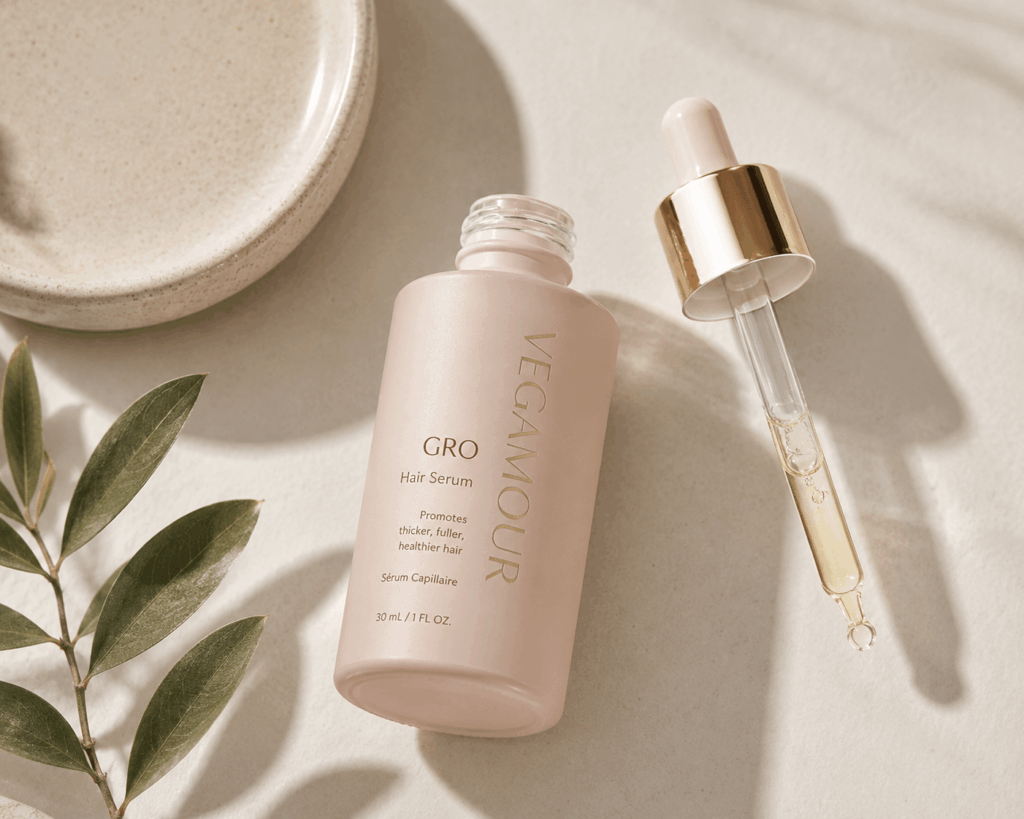
1. Vegamour GRO Hair Serum
Vegamour GRO is the most widely recognized plant-based hair growth serum on the market, formulated specifically for people who want a vegan alternative to minoxidil. It uses a phyto-actives blend including mung bean sprout extract and red clover to target the hair growth cycle without synthetic drug ingredients.
This serum is the go-to recommendation for people who tried minoxidil and experienced irritation, dryness, or other tolerance issues. It requires a minimum 4-month protocol for visible results, consistent with the general timeline for non-drug hair growth actives.
Best for: Plant-based and vegan beauty preferences, sensitive scalps, minoxidil intolerance.
Key ingredients: Mung bean sprout extract, red clover extract, curcumin, biotin.
Amazon pick: Vegamour GRO Hair Serum
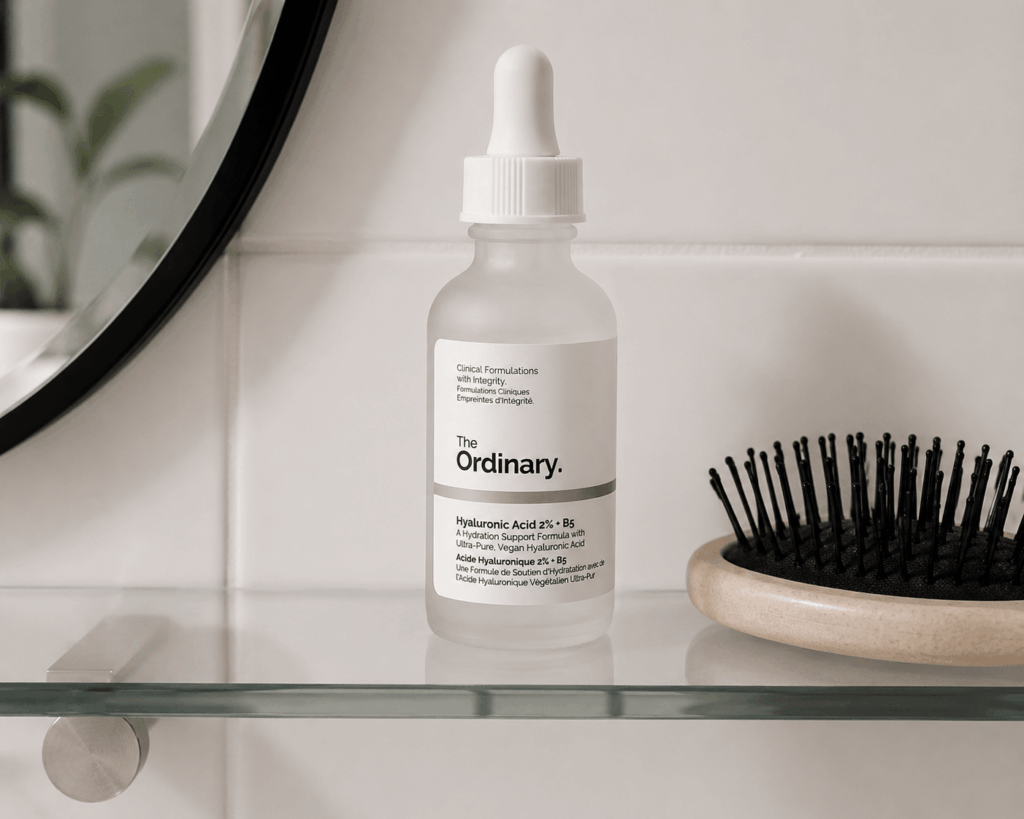
2. The Ordinary Multi-Peptide Serum for Hair Density
The Ordinary’s hair serum stacks Redensyl, Procapil, Baicapil, AnaGain Nu, and Capixyl, five major branded peptide complexes, into a single formula at an exceptionally accessible price point. It is widely regarded by skincare formulation experts as the best value pick in the entire peptide serum category.
According to vialcase.com’s 2026 ingredient breakdown, The Ordinary “stacked all five of the major branded hair-peptide complexes into one serum at an unprecedented price,” making it the clear choice for anyone who wants comprehensive peptide coverage without paying for five separate products.
Best for: Budget-conscious shoppers who want maximum peptide diversity in one bottle.
Key ingredients: Redensyl, Procapil, Capixyl, Baicapil, AnaGain Nu.
Amazon Pick: the ordinary multi-peptide serum for hair density
3. Women’s Rogaine 2% Minoxidil Topical Solution
Women’s Rogaine remains the most dermatologist-recommended over-the-counter minoxidil product specifically formulated for female pattern hair loss. It contains 2% minoxidil, the concentration clinically proven to extend the hair growth phase and boost follicle activity in women.
According to Dr. Orit Markowitz, leading dermatologist and CEO and founder of OptiSkin, quoted by Shop TODAY (2026): “The foam penetrates your scalp and targets your hair follicle to reactivate the growth cycle.” Note that some initial shedding is common and expected in the first few weeks of starting minoxidil. As Dr. Robert Finney, board-certified dermatologist, explained: “It’s normal, it’s just kicking your hair that was about to go into the resting phase out.”
Best for: Women with diagnosed female pattern hair loss wanting the most clinically established option.
Key ingredients: 2% Minoxidil.
Amazon pick: Women’s Rogaine 2% Minoxidil Topical Solution
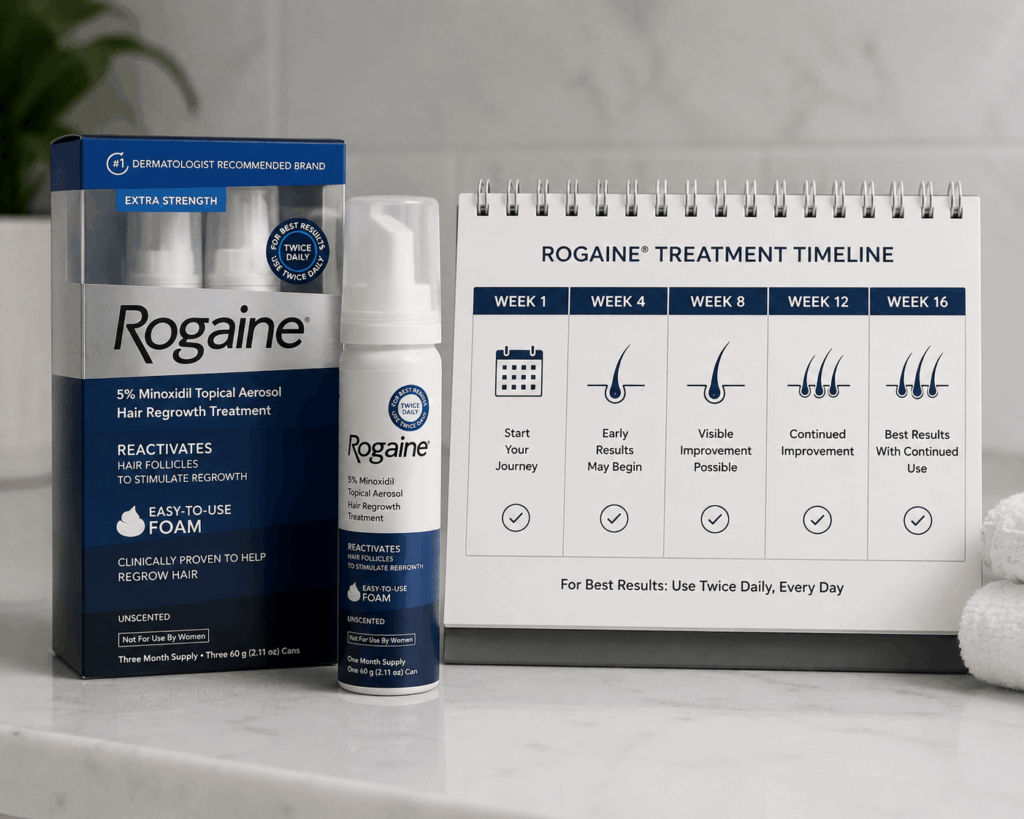
4. Men’s Rogaine 5% Minoxidil Foam
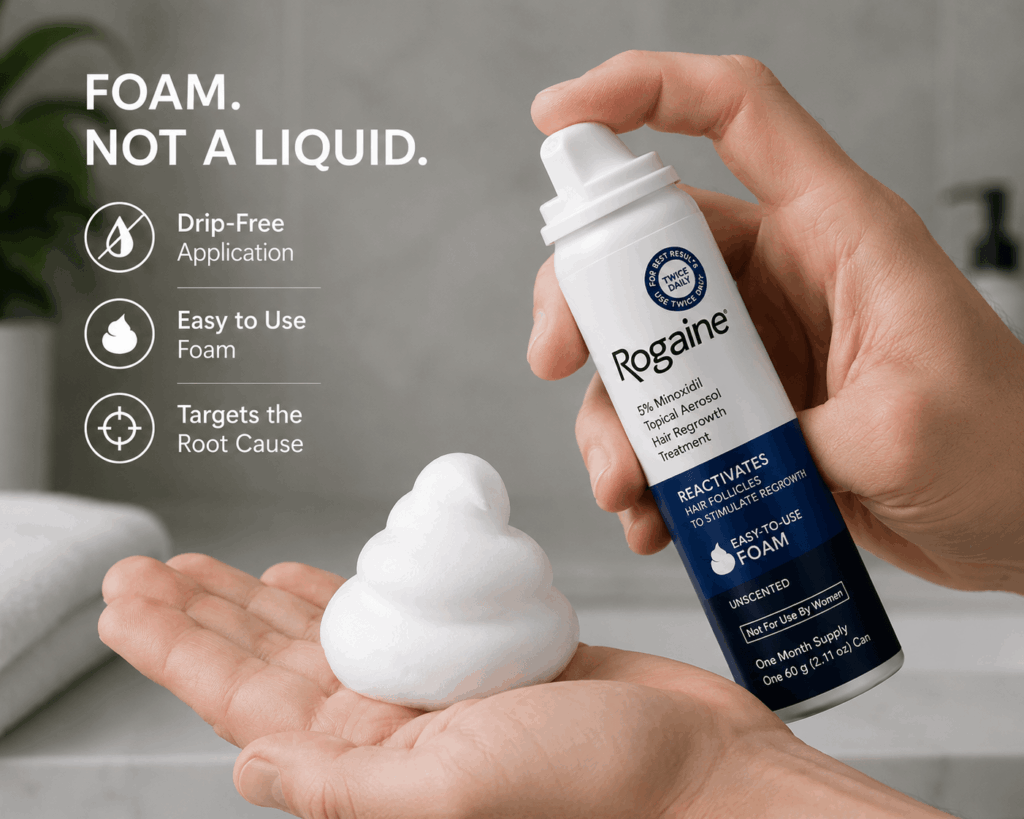
Men’s Rogaine Foam delivers the highest concentration of minoxidil available without a prescription, applied as a drip-free foam rather than a liquid solution. This is the most clinically backed option for men experiencing androgenetic alopecia at the crown or temples.
According to Dr. Tracy Evans, board-certified dermatologist and medical director of Pacific Skin and Cosmetic Dermatology, quoted by CNN Underscored (January 2026): “Both men and women can use this easy, drip-free formula with the highest amount of minoxidil available without a prescription.” Dermatologists generally recommend applying it once or twice daily for optimal results.
Best for: Men with moderate androgenetic alopecia wanting maximum strength over-the-counter treatment.
Key ingredients: 5% Minoxidil.
Amazon pick: Men’s Rogaine 5% Minoxidil Foam
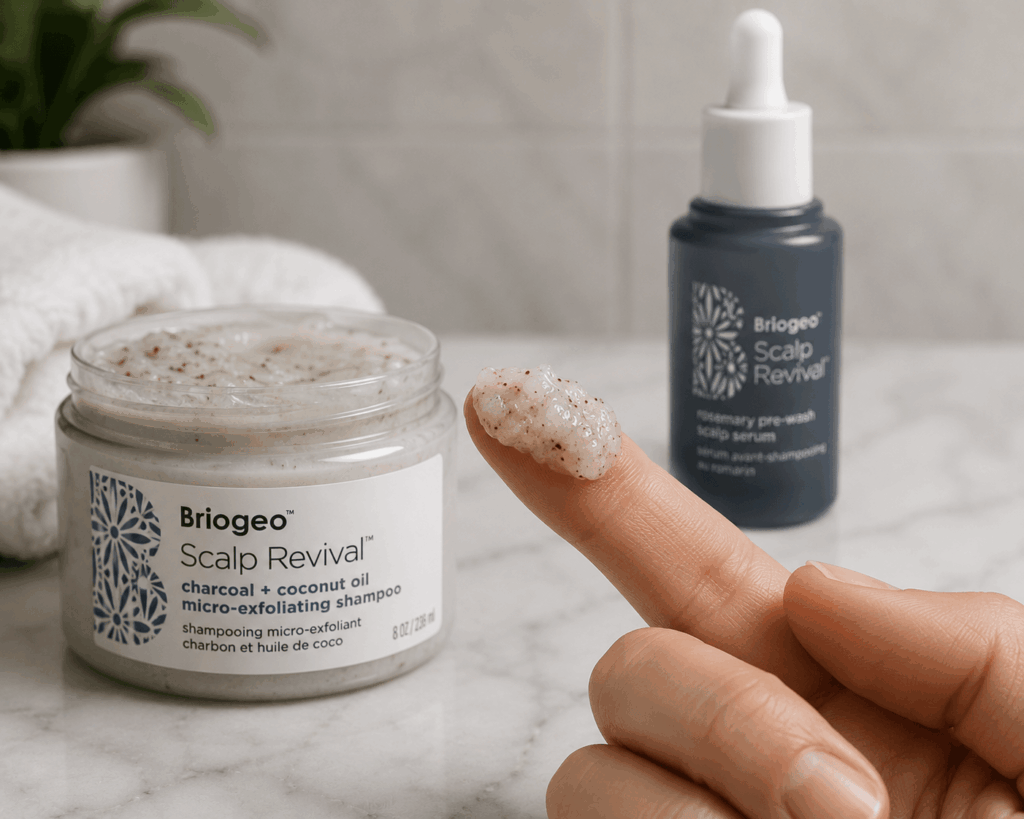
5. Briogeo Scalp Revival Charcoal + Coconut Oil Micro-Exfoliating Scalp Scrub and Serum Duo
Briogeo’s scalp-focused approach pairs an exfoliating treatment with serum-style follow-up care, addressing the often-overlooked reality that healthy hair growth starts with a clean, balanced scalp. This is one of the few hair growth products built primarily around scalp health rather than a single active ingredient.
Associate editor Shannon Garlin, who tested the formula for a Shop TODAY Beauty Awards feature, reported: “I no longer find myself scratching my head throughout the day, and the flaking is completely gone. Plus, my skin and strands went from feeling dry to hydrated and moisturized.”
Best for: People dealing with scalp buildup, flaking, or itchiness alongside thinning hair.
Key ingredients: Charcoal, coconut oil, tea tree oil, peppermint oil.
Amazon pick: Briogeo Scalp Revival Charcoal Coconut Oil Micro-Exfoliating Scalp Scrub
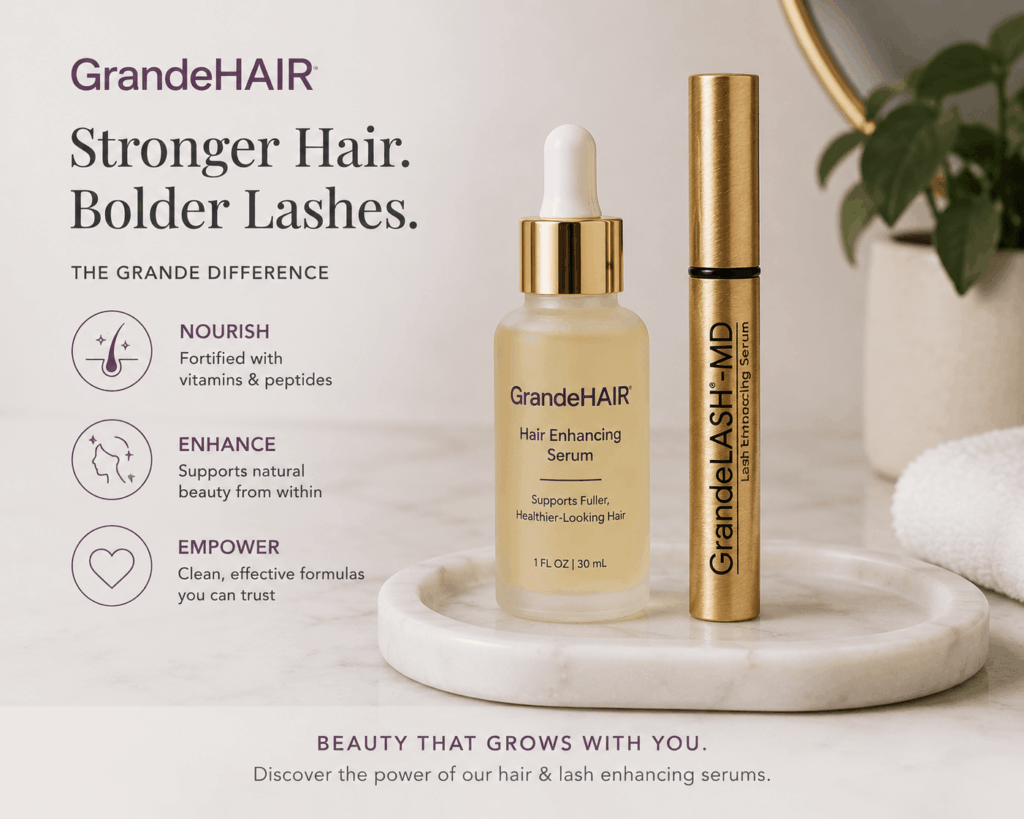
6. Grande Cosmetics GrandeHAIR Serum
GrandeHAIR comes from the brand behind the viral GrandeLASH lash growth serum, applying the same prostaglandin analog technology, isopropyl cloprostenate, to scalp stimulation and hair density. It is recommended by dermatologists specifically for people who responded well to lash growth serums and want a similar mechanism applied to the scalp.
According to Dr. Marina Kobets, board-certified dermatologist quoted by CNN Underscored (January 2026), the formula “also includes strengthening amino acids like L-proline and barrier-supporting ingredients like panthenol and peptides.”
Best for: People who have had success with lash or brow growth serums and want a scalp equivalent.
Key ingredients: Isopropyl cloprostenate, L-proline, panthenol, peptides.
Amazon pick: Grande Cosmetics GrandeHAIR Serum
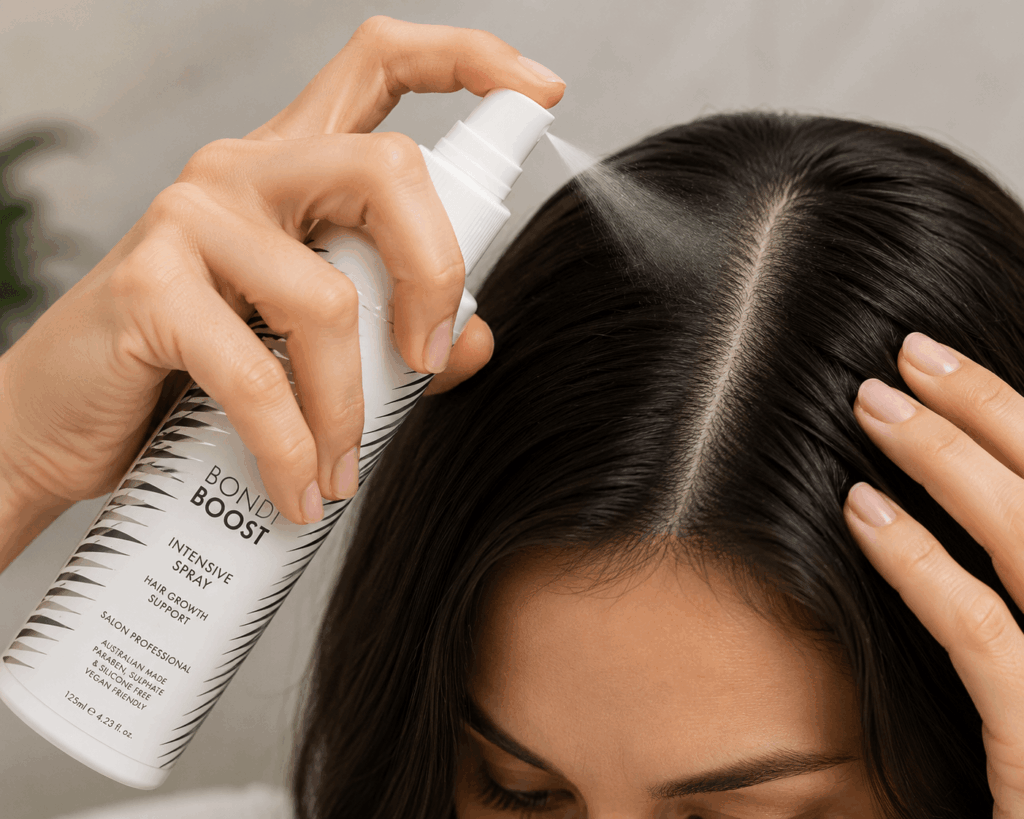
7. Bondi Boost Hair Growth Spray
Bondi Boost is a cult-favorite hair growth spray combining caffeine, saw palmetto, amino acids, and biotin in an easy spray-on format rather than a dropper serum. The spray application makes it a popular complement to minoxidil, or a standalone option for people avoiding minoxidil specifically.
Caffeine’s role in hair growth has growing scientific interest. According to Dr. Michele Green, board-certified dermatologist in New York City, quoted by TODAY (2026): “Caffeine is a stimulant that increases circulation, allowing beneficial nutrients and oxygen to be delivered to the hair follicles to keep them healthy.” Research has also shown that caffeine can help block the conversion of testosterone to DHT, the hormone linked to androgenetic alopecia.
Best for: People who prefer spray application over dropper serums, or want an easy daily complement to other treatments.
Key ingredients: Caffeine, saw palmetto, amino acids, biotin.
Amazon pick: Bondi Boost Hair Growth Spray
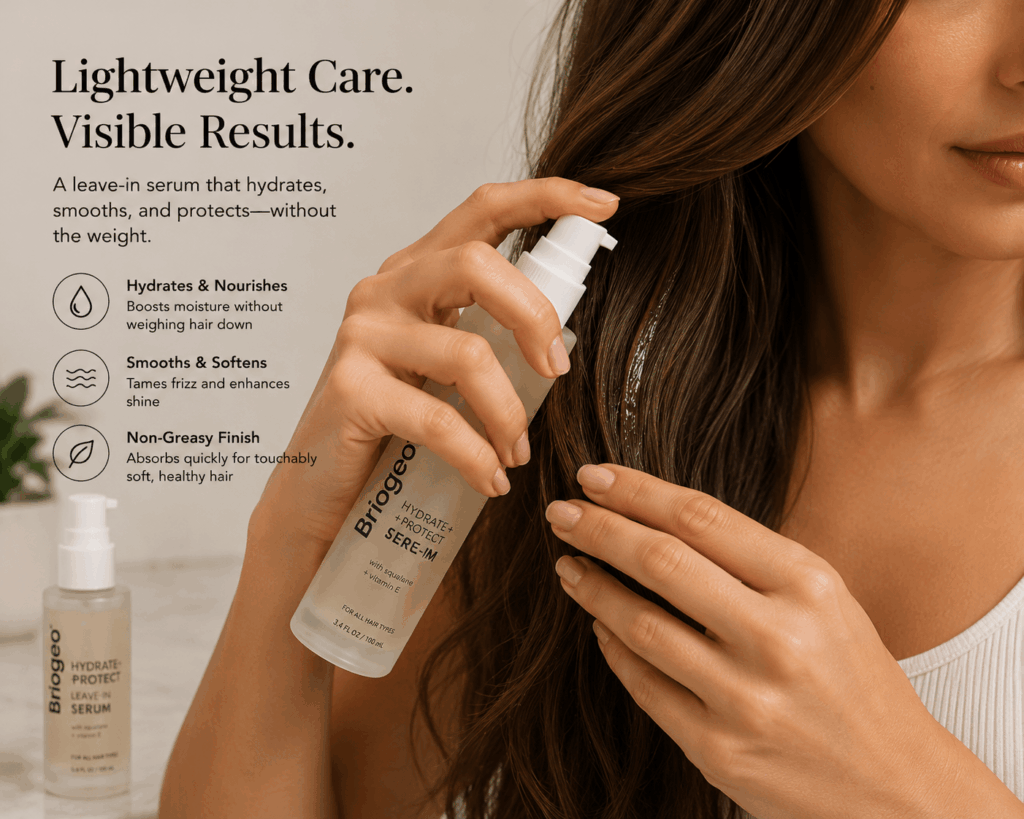
8. Hair La Vie Follicle Boost Serum
Hair La Vie’s Follicle Boost combines botanical DHT-blockers with nourishing oils in a formula designed for daily leave-in use, positioning itself as a gentler, plant-forward alternative within the peptide and botanical serum category. The brand emphasizes daily consistency over high-concentration single actives.
This serum fits well for people who want a botanical-leaning option but prefer a more traditional leave-in serum texture rather than a thin dropper-applied liquid.
Best for: People who want a botanical DHT-blocking formula in a leave-in serum texture.
Key ingredients: Biotin, saw palmetto, nettle leaf extract, rosemary extract.
Amazon pick: Hair La Vie Follicle Boost Serum
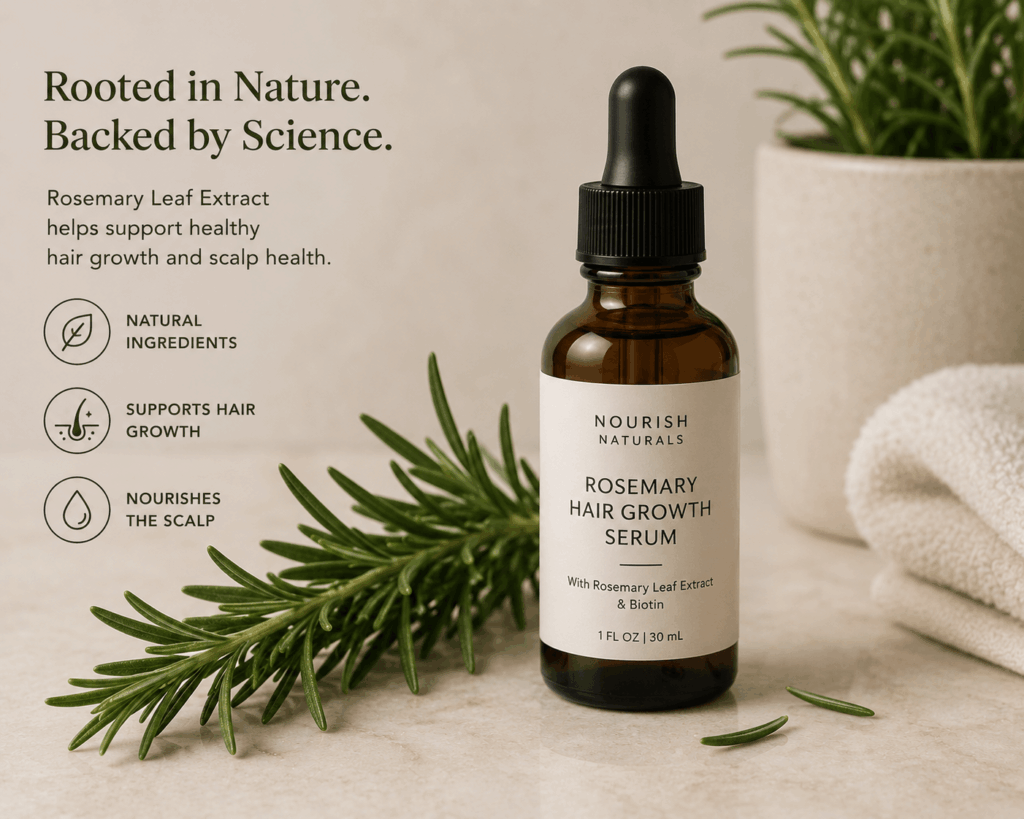
9. Crown Affair The Serum (Rosemary-Based Scalp Oil Serum)
Rosemary oil has emerged as one of the most credible natural alternatives to minoxidil, backed by a randomized controlled study comparing it directly against 2% minoxidil. Crown Affair’s serum builds its formula around rosemary as the hero ingredient, positioning it for people who specifically want research-backed botanical options.
The supporting clinical evidence is genuinely notable. According to a randomized controlled trial cited in a 2026 PMC review, 100 patients with androgenetic alopecia were assigned to apply either rosemary oil or 2% minoxidil for six months. Both groups experienced a significant increase in hair count compared to baseline, with no significant difference found between the groups at either the 3-month or 6-month mark. Notably, scalp itching was reported more frequently in the minoxidil group at both checkpoints.
Best for: People specifically seeking research-backed natural alternatives to minoxidil with comparable efficacy.
Key ingredients: Rosemary oil, biotin, peptides.
Amazon pick: Crown Affair Rosemary Hair Growth Serum
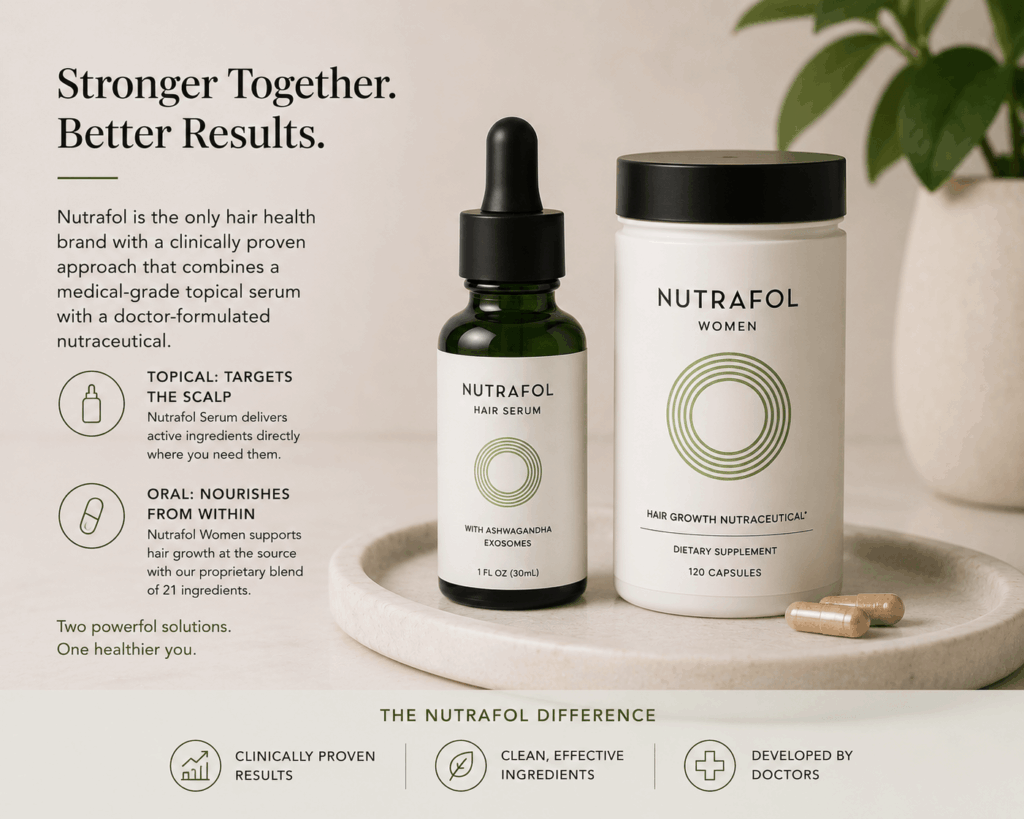
10. Nutrafol Scalp Serum (Biotinoyl Tripeptide-1 Formula)
Nutrafol’s scalp serum is built around biotinoyl tripeptide-1, one of the specific peptides Dr. Bauman names directly as evidence-based, alongside niacinamide and additional botanical extracts. It is designed to pair with the brand’s well-known oral supplement line for a combined topical and ingestible approach.
The serum’s standout feature is its targeted peptide selection rather than a broad multi-actives approach, making it a good fit for people who want a more streamlined formula with fewer total ingredients competing for absorption.
Best for: People already using Nutrafol’s oral supplements who want a complementary topical product, or anyone wanting a peptide-forward but simplified ingredient list.
Key ingredients: Biotinoyl tripeptide-1, niacinamide, botanical extracts.
Amazon pick: Nutrafol Scalp Serum
Ten serums covered. Picking the right one is only half the equation. Here is exactly how to apply any of them for the best possible results.
How to Apply a Hair Growth Serum for Best Results
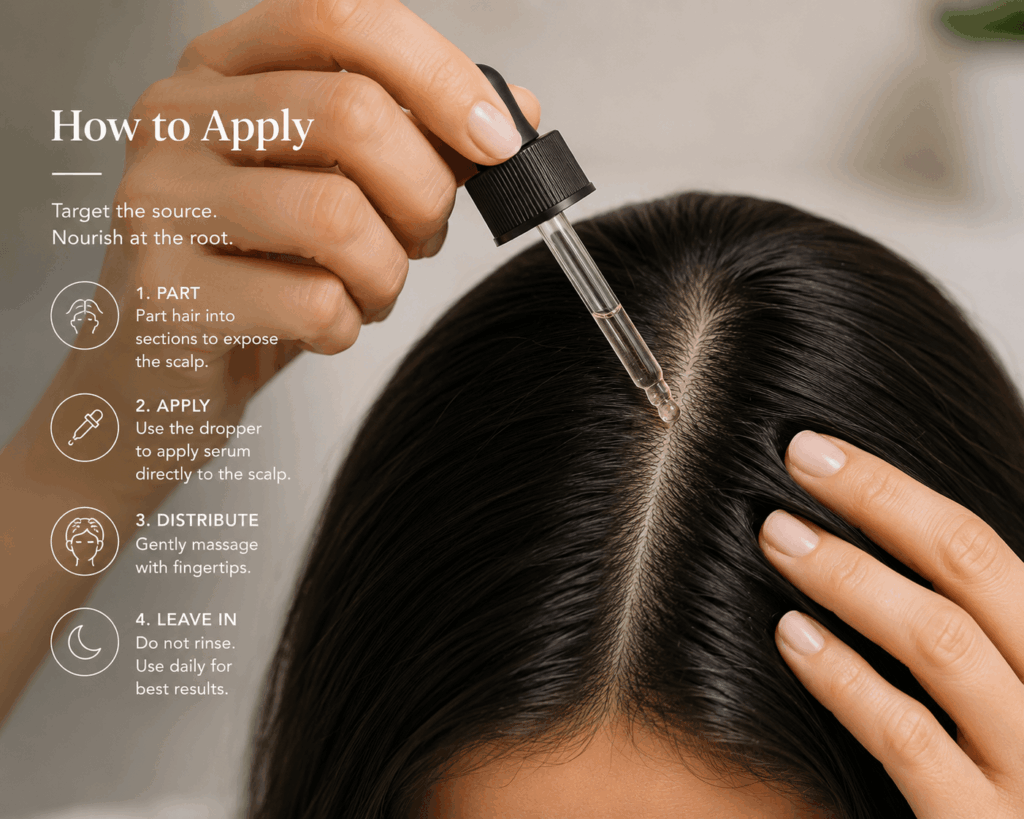
Apply hair growth serum once or twice daily directly to a clean, dry scalp, focusing on thinning areas like the temples and crown. Use the dropper to part the hair so the product reaches the scalp rather than coating the hair shaft, and massage gently to improve absorption and circulation.
Most topical hair serums follow a similar application process regardless of their specific active ingredients:
- Start with a clean, dry or slightly damp scalp, ideally right after washing
- Use the dropper or applicator to part hair into small sections
- Apply the serum directly to the scalp at thinning areas, not along the hair shaft
- Massage gently with fingertips for 30 to 60 seconds to improve circulation and absorption
- Leave it on. Do not rinse out unless the product specifically instructs otherwise
- Repeat once or twice daily, exactly as the product label recommends
Consistency matters more than the specific product you choose. Skipping days repeatedly is the single biggest reason hair growth serums fail to deliver visible results.
Pair your serum with supportive habits for the best outcome: avoid tight hairstyles that stress the follicle, minimize heat styling damage, and address any underlying nutritional gaps. Our guide on determining your hair porosity is also useful here, since porosity affects how well your scalp and strands absorb topical treatments.
Application technique sorted. The next question almost everyone asks: how long until you actually see results?
How Long Does It Take to See Results From a Hair Growth Serum?
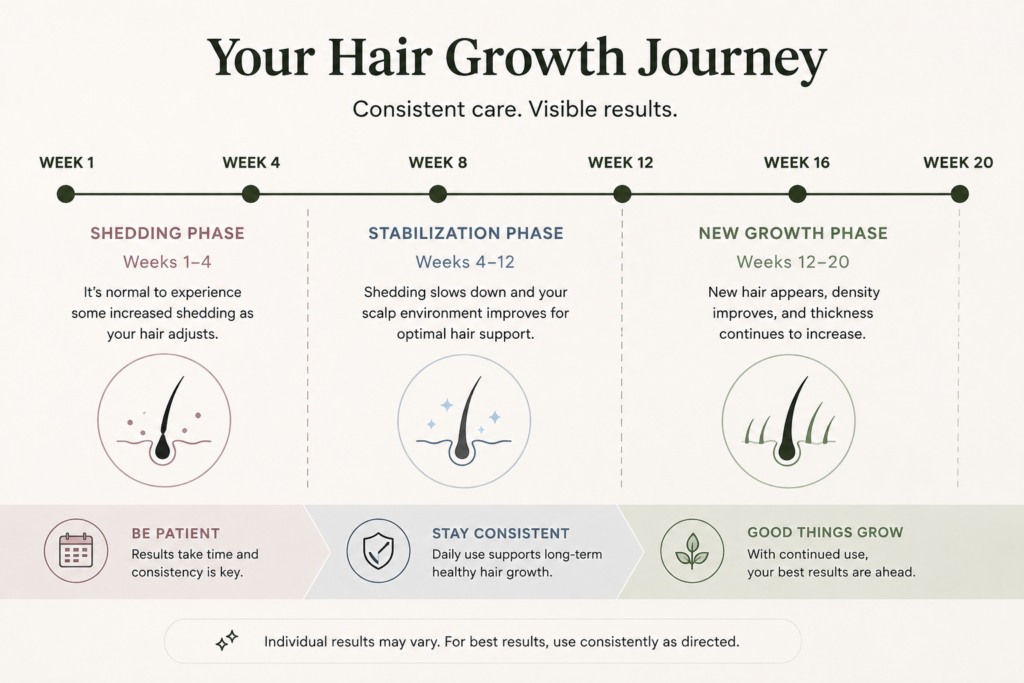
Most hair growth serums reduce shedding within 8 to 12 weeks of consistent daily use, with visible new hair growth typically appearing between 16 and 20 weeks. Minoxidil may show slightly faster initial results, but all topical treatments require a minimum of four months before declaring them ineffective.
This timeline catches almost everyone off guard. Hair grows in cycles, and a single follicle takes time to shift from a resting phase back into active growth, then additional time for that new hair to become visible above the scalp.
The typical timeline:
- Weeks 1 to 4: Some products, especially minoxidil, may trigger temporary increased shedding as the hair cycle resets. This is expected, not a sign of failure.
- Weeks 8 to 12: Reduced shedding becomes noticeable. This is usually the first sign the product is working.
- Weeks 16 to 20: New, visible hair growth, often described as short “baby hairs” along the hairline or part, becomes apparent.
- Months 6 and beyond: Continued improvement in density and thickness, assuming consistent use.
The most common reason people believe a hair serum “did not work” is stopping before the 16-week mark. According to hair restoration research broadly cited across dermatology sources, discontinuing treatment before this point essentially guarantees you will never see the results the product was capable of delivering.
Hair Growth Serums Compared: Quick Reference Table
| Serum | Key Active | Best For | Format |
|---|---|---|---|
| Vegamour GRO | Mung bean sprout, red clover | Vegan, sensitive scalp, minoxidil intolerance | Dropper serum |
| The Ordinary Multi-Peptide | Redensyl, Procapil, Capixyl, Baicapil, AnaGain Nu | Best value, comprehensive peptide stack | Dropper serum |
| Women’s Rogaine | 2% Minoxidil | Diagnosed female pattern hair loss | Topical solution |
| Men’s Rogaine Foam | 5% Minoxidil | Moderate male androgenetic alopecia | Foam |
| Briogeo Scalp Revival | Charcoal, coconut oil | Scalp buildup, flaking, itchiness | Scrub + serum duo |
| GrandeHAIR | Isopropyl cloprostenate, peptides | Lash serum users wanting scalp equivalent | Dropper serum |
| Bondi Boost | Caffeine, saw palmetto, biotin | Spray-on convenience, daily complement | Spray |
| Hair La Vie Follicle Boost | Saw palmetto, nettle, rosemary | Botanical leave-in preference | Leave-in serum |
| Crown Affair The Serum | Rosemary oil | Research-backed natural alternative to minoxidil | Dropper serum |
| Nutrafol Scalp Serum | Biotinoyl tripeptide-1, niacinamide | Pairing with oral supplements | Dropper serum |
Frequently Asked Questions
Conclusion
Choosing the right hair growth serum comes down to matching the active ingredient to your specific situation: minoxidil for the strongest clinical evidence, peptide blends like Redensyl and Procapil for a gentler approach with comparable results, or rosemary oil if you want a research-backed natural alternative.
What matters more than which serum you pick is sticking with it. Reduced shedding by week 8 to 12, visible growth by week 16 to 20. That is the real timeline, and most disappointment with hair serums comes from stopping before that window closes.
Start with one serum that matches your hair loss type and your tolerance for synthetic versus botanical ingredients. Apply it daily. Give it the full 16 weeks before judging whether it is working. Your follicles are not broken. They just need consistent support to get back to doing what they already know how to do.