How to Make Your Home Look Expensive: 12 Minimalist Home Decor Ideas on Any Budget
🔑 Quick Answer: Minimalist Home Look Expensive
Minimalist home decor looks expensive when you focus on warm neutral tones, natural textures, quality lighting, and intentional negative space. You do not need to spend much. Swapping harsh whites for earthy neutrals, adding linen and wood textures, upgrading cabinet hardware, and keeping surfaces clear are the fastest high-impact changes at any budget.
You walk into a beautifully decorated home and think: this person must have spent a fortune. Then you find out the sofa is from IKEA, the art is a printed poster in a thrifted frame, and the plants came from a Sunday market for ₹150. That is not luck. That is intentional minimalist styling, and it is one of the most learnable skills in home decor.
In 2026, minimalist home decor has moved well beyond cold white walls and empty surfaces. The new direction is warm, textured, and deeply personal — and it is surprisingly achievable on a budget.
This article gives you 12 specific, actionable ideas to make your home look expensive without an expensive price tag.
KEY TAKEAWAYS
1. The 2026 minimalist aesthetic is warm, not clinical — earthy neutrals, natural textures, and intentional negative space replace stark white and clutter.
2. Lighting is the single highest-impact and lowest-cost upgrade in any room.
3. Decluttering is free and instantly makes a space look more expensive.
4. Swapping hardware (handles, knobs, faucet finishes) transforms furniture and kitchens for under ₹2,000.
5. Natural materials — linen, wood, stone, terracotta — signal quality regardless of what they actually cost.
6. One large piece of art does more for a room than ten small ones.
What Makes a Home Look Expensive? (It Is Not What You Think)
A home looks expensive when it feels intentional. Clean surfaces, a cohesive color story, quality textures, and good lighting create a perception of wealth regardless of what anything cost. According to interior designers, the single biggest thing that makes a home look cheap is not the price of the furniture — it is the absence of intention.
As Juliana Custers, London-based interior designer, stated in Living Etc. (January 2026): “When a home doesn’t reflect the people living there, it starts to feel temporary — like it’s waiting to be approved by someone else.” The expensive-looking home is one that feels settled, curated, and lived-in — not showroom-ready and not chaotic.
Cheap does not mean budget. It means lack of intention. Sometimes, the good ideas of years past don’t make sense with your current tastes.
Three things produce the “expensive” perception every time:
- Cohesion. Colors, textures, and finishes that speak the same visual language.
- Negative space. Empty space is not wasted space. It is the breathing room that makes everything else look intentional.
- Quality of light. Harsh overhead lighting exposes every cheap detail. Warm, layered lighting hides imperfections and creates atmosphere instantly.
If you want to see which specific items are trending and worth investing in right now, the full guide to best trending home decor items in 2026 has expert-reviewed picks at every price point.
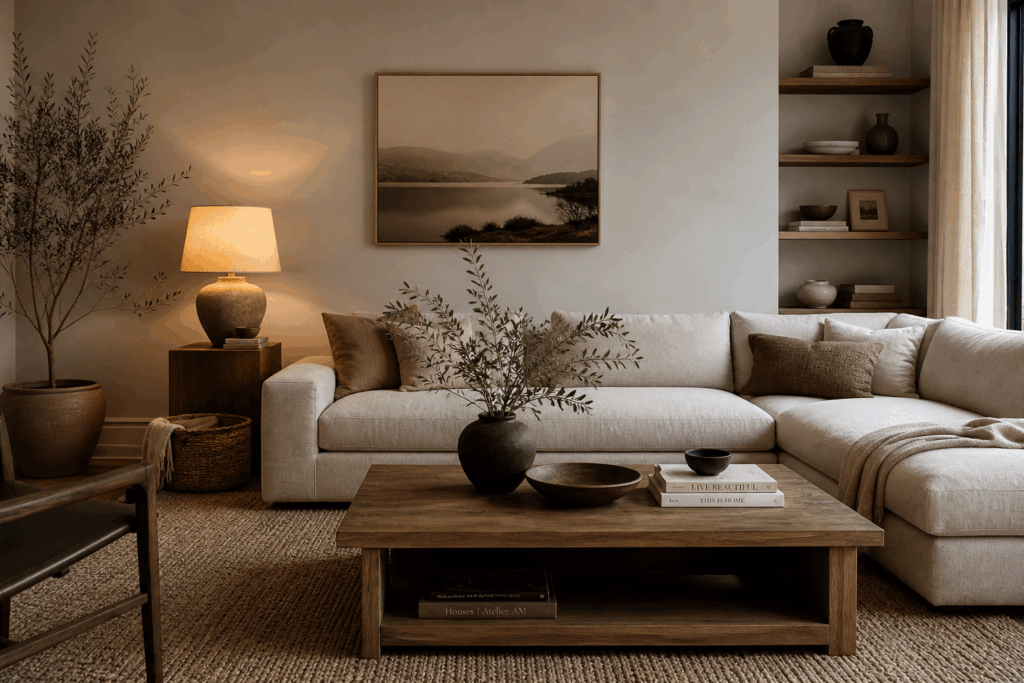
The first and most powerful upgrade costs you nothing at all.
Idea 1: Declutter First — Always
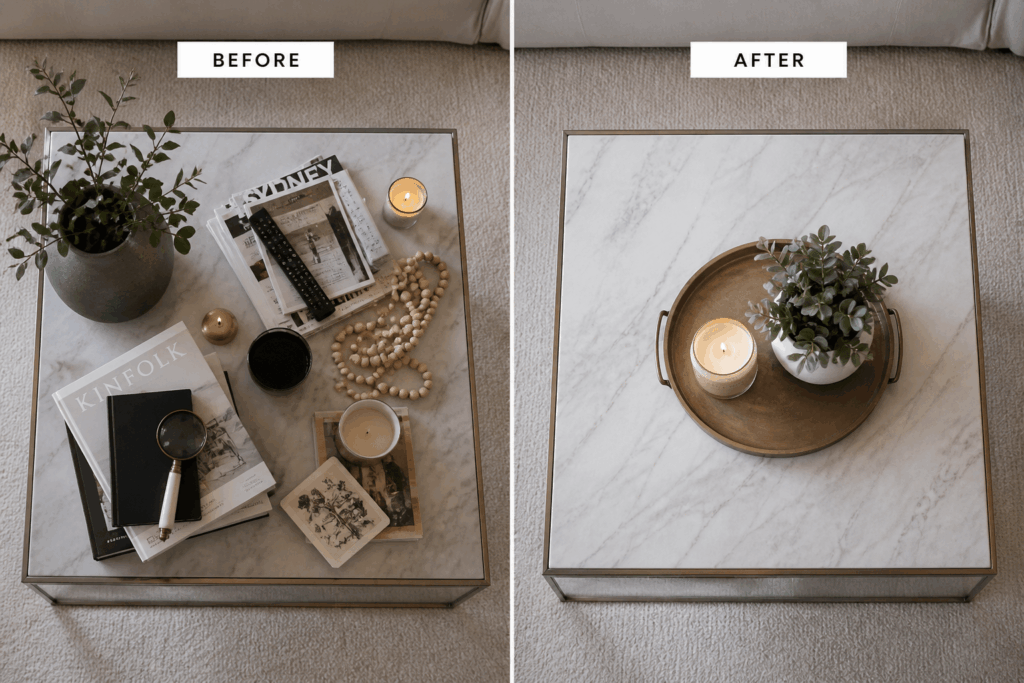
Decluttering is the single most powerful thing you can do for a minimalist home. It is completely free and produces an immediate visual transformation. Clutter signals chaos. Empty space signals confidence and taste. No amount of new decor fixes a cluttered surface.
Most people try to solve the “my home doesn’t look good” problem by buying more. That is backwards. The expensive-looking home has less in it, not more. A clear countertop, an empty corner, a bookshelf with breathing room between objects — these read as intentional and refined in a way that a fully packed room never will.
The rule interior stylists use: everything on display must earn its place. Every object either serves a function, has personal meaning, or is genuinely beautiful. Anything that is neither gets stored or removed.
Start with surfaces: clear your coffee table down to two or three intentional objects. Clear your kitchen counters to only what you use daily. Clear your nightstand to a lamp, a book, and one small item. The room will feel instantly bigger, calmer, and more expensive.
A consistent weekly reset habit makes this much easier to maintain long-term. The Sunday reset routine is a practical system for keeping your home in this calm, clear state without it feeling like constant effort.
Decluttered? Good. Now the color choices on your walls and surfaces will actually land the way they are supposed to.
Idea 2: Switch to Warm Neutrals — Ditch Harsh White
The all-white minimalist aesthetic is fading fast in 2026. Warm neutrals — cream, camel, clay, mocha, mushroom, and soft terracotta — make rooms feel rich and expensive while maintaining the clean, calm quality of minimalism. They are also significantly more forgiving on budget furniture and imperfect walls.
Interior designer Taniya Nayak, in her interview with The Zoe Report (September 2025), describes warm minimalism as “bringing sexy back to beige.” The update on minimalism is focused on a more sensory, tactile design experience with a mix of textures. Warm neutrals are the canvas that makes that texture sing.
According to trend reporting by Homes and Gardens (2026), richer browns and clay-inspired neutrals are now key directional anchors for modern spaces, alongside muted greens and soft stone tones.
What this looks like in practice:
- Repaint one wall in a warm clay or soft mushroom tone instead of brilliant white
- Swap bright white bedding for cream or oat linen
- Replace any stark white accessories with pieces in warm stone, sand, or caramel tones
- Use a single warm neutral as your base and layer two or three tonal variations of it
The key is limiting your palette to 3 to 4 colors maximum. This single constraint makes any room look more considered and expensive, regardless of where the furniture came from.
Paint is the most powerful budget upgrade in home decor. A ₹1,500 tin of warm clay paint transforms a room more than ₹15,000 of new accessories.
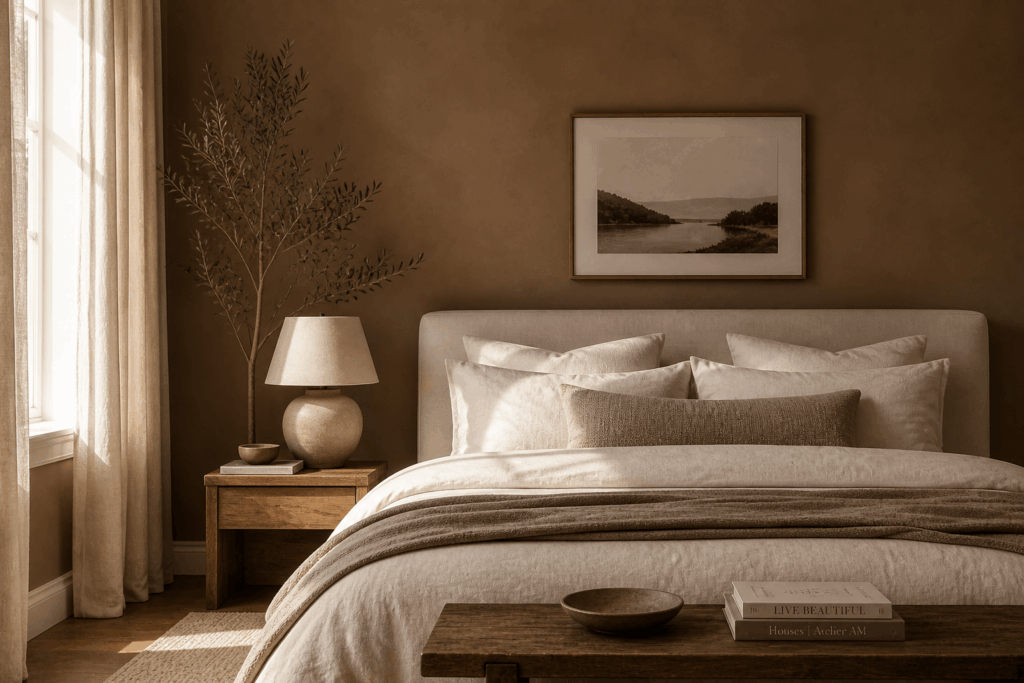
Color sets the foundation. Texture is what makes the room feel genuinely luxurious.
Idea 3: Layer Natural Textures — Linen, Wood, Stone, Terracotta
Natural textures — linen, raw wood, stone, terracotta, and bouclé — create the sensory richness that makes minimalist rooms feel expensive and inhabited rather than sterile. They work at any budget because the perception of quality comes from the material itself, not the price tag attached to it.
Taniya Nayak explains in The Zoe Report (2025): “You have materials like mohair, bouclé, and imperfect surfaces that add that sensory feeling.” Layering these into a neutral room is as simple as adding a linen throw over a sofa, placing a wooden bowl on a shelf, or swapping plastic storage bins for woven baskets.
The reason natural textures signal expensive is rooted in contrast. A smooth, matte linen cushion against a slightly rough terracotta pot against a warm wooden shelf creates a visual layering that looks deliberate and sophisticated. No individual piece needs to cost much. The combination is what does the work.
Easy natural texture swaps by room:
- Living room: linen cushion covers, a bouclé or wool throw, a wooden tray on the coffee table
- Bedroom: linen or cotton duvet cover, wooden bedside tray, a terracotta or stone lamp base
- Kitchen: woven storage baskets, a wooden chopping board displayed as decor, stone or ceramic canister set
- Bathroom: linen hand towel, wooden soap dish, a small stone or ceramic tray for products
According to SmallBizTrends (2025), over 60% of consumers now prefer environmentally friendly furniture options, which means bamboo, reclaimed wood, and natural fiber pieces are widely available and increasingly affordable.
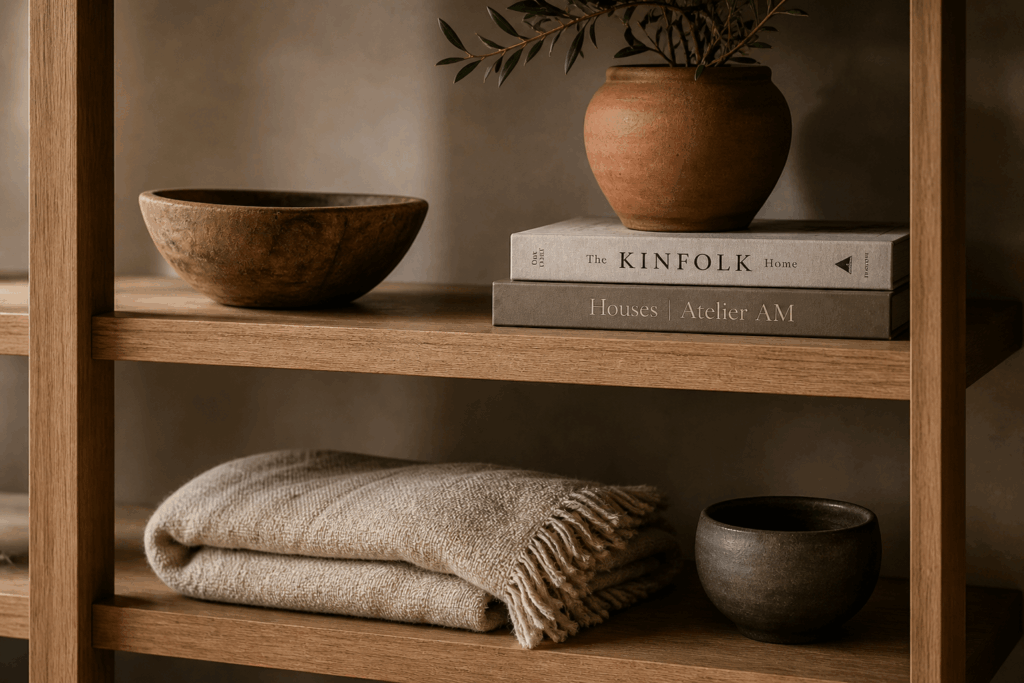
Textures add depth. Plants add life. And life is what separates a beautiful room from a magazine set.
Idea 4: Add One Statement Plant (Not a Collection)
A single, well-placed large plant does more for a minimalist room than a collection of small ones scattered around every surface. Large-leaf plants — fiddle leaf figs, monstera, bird of paradise, rubber plants — create a natural focal point, add organic shape, and signal intentional styling at very low cost.
Biophilic design — the practice of bringing natural elements indoors — is one of the strongest 2026 home decor trends, according to Decorilla’s Interior Design Trends Report (2026). The principle is simple: even a single plant can change the feel of a room completely.
The minimalist approach to plants is restraint. One large statement plant in a corner, or three small plants grouped intentionally rather than scattered, reads as designed. Plants everywhere, on every shelf and windowsill with no thought to placement, reads as collected over time without intention.
What to look for in a budget statement plant:
- Monstera deliciosa: large, dramatic leaves, grows well indoors in indirect light
- Snake plant: architectural and near-indestructible, perfect for beginners
- Rubber plant: deep green glossy leaves that photograph beautifully
- Fiddle leaf fig: the gold standard for a corner statement piece
The pot matters as much as the plant. A beautiful plant in a cheap plastic pot looks cheap. The same plant in a simple terracotta, matte ceramic, or woven basket pot looks styled. Spend on the pot before you spend on the plant.
For a complete guide to which plants work best indoors in India and how to keep them alive without effort, the full article on best indoor plants for beginners covers everything you need.
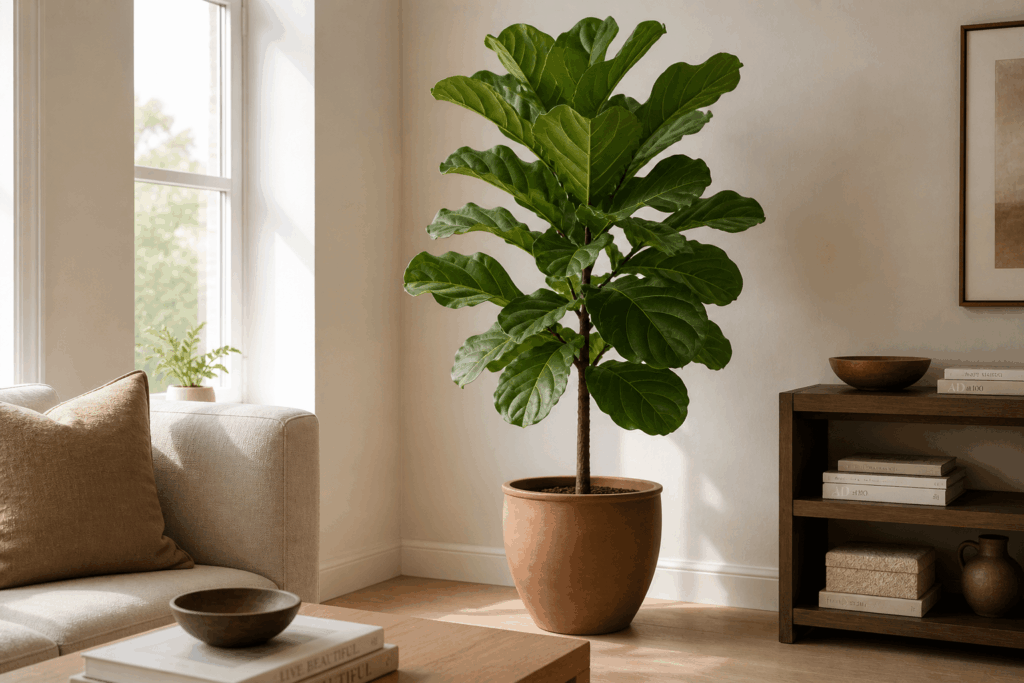
Plants bring life. Lighting brings magic. And most people are getting lighting completely wrong.
Idea 5: Fix Your Lighting — It Changes Everything
Lighting is the single most underestimated element in home decor. Harsh overhead lighting makes every room look flat and cheap. Warm, layered lighting — a combination of floor lamps, table lamps, and candles — creates atmosphere and hides imperfections. Replacing one overhead light source with a lamp costs less than ₹1,500 and transforms a room instantly.
Interior designer Taniya Nayak told The Zoe Report (2025): “The way we’re doing that is we’re adding little table lamps into the kitchen, we’re updating the details. Just adding that glam, like a gold or marble detail.” This principle applies to every room, not just the kitchen.
The rule for expensive-looking lighting is simple: never rely on a single overhead light as your only source. Overhead lights flatten a room and expose every imperfection. Layered lighting from different heights — a floor lamp in a corner, a table lamp on a side table, a candle or two — creates depth, warmth, and the kind of atmosphere that makes a room feel considered.
The warm bulb rule. If your lighting feels harsh, the fastest fix costs under ₹200: replace cool-white bulbs with warm white bulbs (2700K to 3000K color temperature). The same fixture produces completely different results. Warm light makes skin, wood, and fabric all look richer and more expensive.
Budget lighting upgrades by priority:
- Replace cool bulbs with warm white bulbs (immediate, cheapest fix)
- Add one floor lamp to a dark corner
- Add a table lamp to a bedside or console table
- Use candles or LED candles on a dining or coffee table for evening atmosphere
If you are interested in smarter lighting solutions that can be controlled by voice or app, the full comparison of Alexa vs Google Home smart home devices covers which smart lighting systems offer the best budget-friendly entry points.
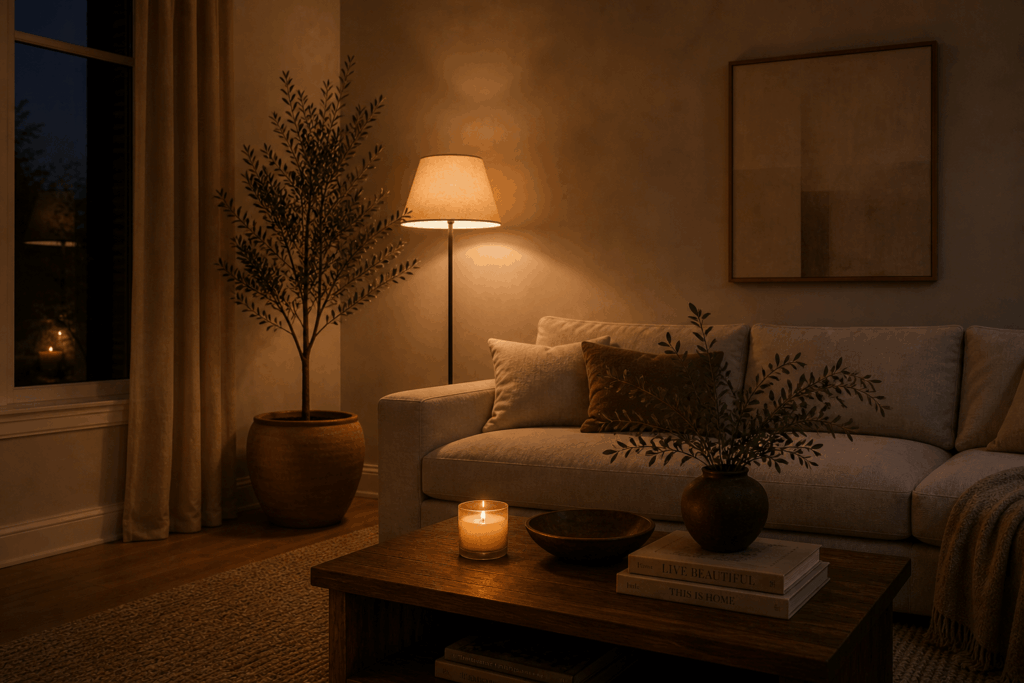
Lighting fixed. Hardware swapped next — and this upgrade has the highest impact-to-cost ratio of anything on this list.
Idea 6: Swap the Hardware — Handles, Knobs, and Taps
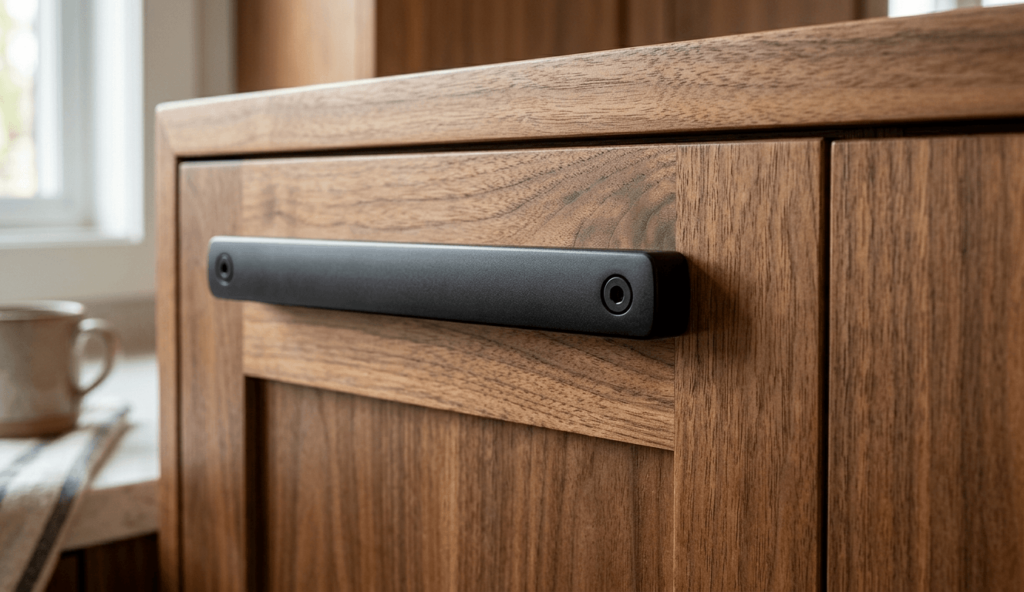
Upgrading cabinet handles, drawer knobs, and tap finishes is one of the cheapest and most dramatic home improvements available. Replacing cheap chrome or plastic hardware with matte black, brushed gold, or antique brass instantly makes any kitchen, bathroom, or bedroom furniture look significantly more expensive.
This is the trick interior designers use on every budget renovation. The furniture stays the same. The hardware changes. And the whole room reads differently.
According to Taniya Nayak’s styling guidance in The Zoe Report (2025), updating hardware and faucets is one of the key ways to achieve a luxury feel in functional spaces, specifically because “this luxurious effect can be achieved through small accessories alone.”
The most effective hardware upgrades:
- Kitchen cabinet handles: swap chrome bar pulls for matte black or brushed brass
- Bathroom tap: a brushed gold tap over a basic basin costs under ₹2,500 and looks designer
- Drawer knobs on bedroom furniture: replace plastic with ceramic, brass, or matte black metal
- Wardrobe handles: brushed gold or antique brass transforms flat-pack wardrobes instantly
You do not need to replace the furniture. The perception of the furniture changes the moment the hardware does.
Cabinet handles typically cost between ₹80 and ₹300 each. Replacing 10 handles costs under ₹3,000 and produces a renovation-level visual impact.
Hardware changes the details. Art changes the story a room tells.
Idea 7: One Large Art Piece Instead of Many Small Ones
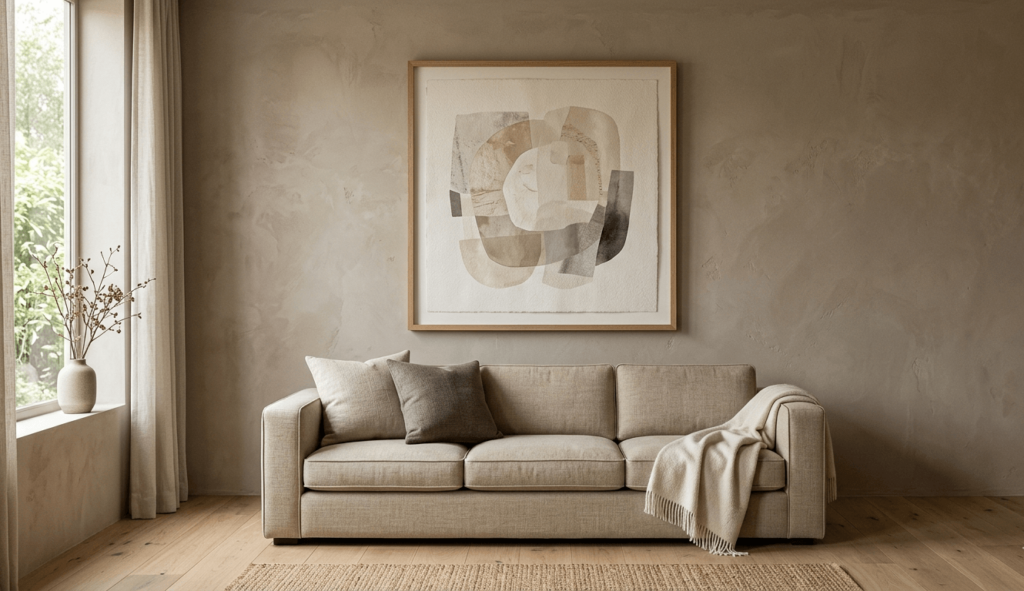
A single large-scale artwork or framed print creates a clear focal point, adds personality, and signals confident, intentional decorating. A gallery wall of ten small, mismatched frames typically reads as collected over time without a unifying vision. In minimalist decor, one strong statement always outperforms many smaller ones.
Interior designer and stylist Emily Henderson, writing in her 2026 decor trend report (January 2026), highlights large-scale photographs and oversized art as one of the defining moves of 2026 home decor: “Large-scale photos are simply just so cool and chic. What is also kinda great is that if you take an awesome photo yourself, get it printed and framed for likely much less than if you were to buy new.”
That insight is the budget-friendly art formula in one sentence. A personal photograph, printed large and placed in a quality frame, costs a fraction of purchased art and looks just as intentional. An abstract print from an affordable online source, printed at a local print shop in A1 or A0 size and framed in a simple thick timber frame, does the same job.
The minimalist art rule:
- One large piece: 60cm x 90cm or bigger on a standard living room wall
- Leave space around it — do not crowd it with smaller pieces
- Simple, clean frame: thick natural wood, matte black, or thin brushed metal
- Neutral or tonal subject matter: abstract, architectural, botanical, landscape
According to Emily Henderson’s 2026 trend report, thick vintage-style frames are making a strong return this year, which works well for both budget prints and personal photos.
Art tells the story. Mirrors multiply the space and the light.
Idea 8: Use Mirrors Strategically
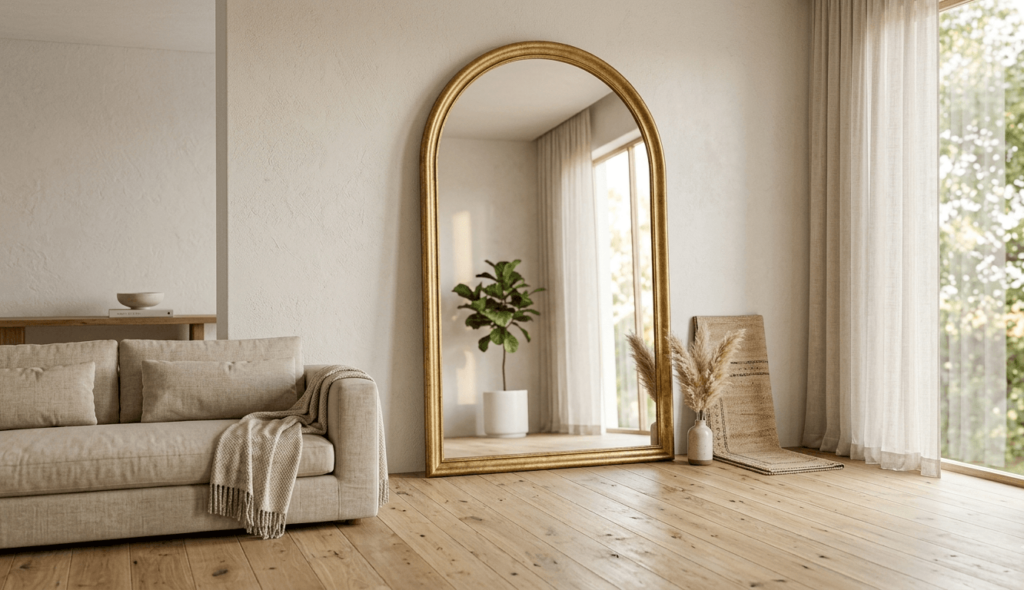
Mirrors are one of the most affordable and highest-impact tools in home decor. A well-placed large mirror doubles the perceived size of a room, bounces light, and adds a visual focal point. The key is strategic placement — opposite a window or light source, not randomly on an empty wall.
Mirrors not only look premium but also help bounce light around, making any room feel brighter and more spacious. By grouping three small, gold-finished mirrors together, you create a high-end gallery feel that looks far more expensive than it actually is, according to Decor Magic Home’s 2026 budget decor roundup.
The minimalist approach to mirrors is simple: one large statement mirror reads more expensive than several small ones. An arched mirror in a warm gold or matte black frame, placed in an entrance hallway or living room corner, is one of the most recognizable markers of a styled home in 2026.
Where to use mirrors for maximum impact:
- Entrance hallway: a tall arched mirror makes a small entry feel grand
- Living room: a large mirror opposite the window doubles the natural light
- Bedroom: a full-length leaning mirror in a corner adds height and light
- Bathroom: a round mirror with a thick brass or matte black frame over a basin replaces builder-grade rectangular mirrors instantly
Organic and irregular mirror shapes — arched, oval, asymmetric — are among the strongest 2026 minimalist decor trends according to Decorilla’s interior design trend analysis.
Mirrors expand space. Trays and groupings give your shelves and surfaces the styled finish they need.
Idea 9: Style Surfaces with the Rule of Three
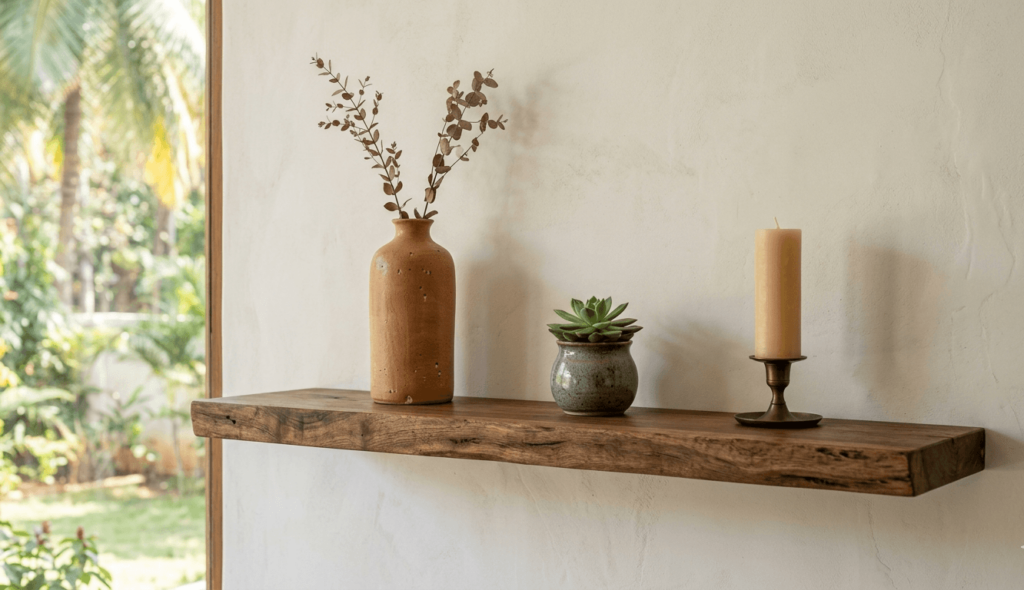
The rule of three in home styling says that objects grouped in odd numbers — particularly threes — look more natural and intentional than even-numbered groupings or solo items. Three objects of varying heights, in complementary tones and materials, create the kind of surface styling that makes a room look genuinely curated without any design training.
This is the technique every interior stylist uses to dress shelves, coffee tables, and side tables. It is not complicated. It just requires restraint and an eye for height variation.
A winning three-item grouping always has:
- Height variation: tall, medium, and low (a candle, a small vase, a low tray — for example)
- Texture variation: smooth, rough, and organic (a ceramic pot, a wooden object, a small plant)
- Tonal harmony: objects that share a color family even if they differ in material
A shelf styled with 15 random objects reads as cluttered. The same shelf with three intentional groupings, space between them, and one or two books horizontal as risers reads as designed.
Empty shelf space is not wasted space. It is the visual pause that makes the styled objects stand out.
Styled surfaces done. Fabric is the final layer that makes a room feel warm, rich, and genuinely inviting.
Idea 10: Invest in One Quality Textile Per Room
A single quality textile in each room — a linen duvet cover, a wool throw, a jute rug — elevates the entire space more than any number of cheap decorative accessories. Fabric is what you feel as well as see, which is why it disproportionately affects the perceived quality of a room. Budget on the textile before the decorative objects.
According to Decorilla’s 2026 Interior Design Trends Report, sensory layering is one of the defining design directions of the year: combining bouclé, velvet, linen, and wool so neutral rooms still feel rich and touchable. This is budget-accessible. You do not need all four. One well-chosen textile per room does the job.
The priority order by impact:
- Living room rug: a jute, wool, or cotton rug in a warm neutral anchors the whole room
- Bedroom duvet cover: linen or high-thread-count cotton in cream, oat, or stone
- Throw blanket: a chunky knit, bouclé, or textured wool throw over a sofa or chair
- Cushion covers: linen or textured fabric cushion covers replace cheap polyester ones
The single most cost-effective upgrade on this list is swapping cheap polyester cushion covers for linen ones. The same cushion insert, different cover, completely different perception of quality.
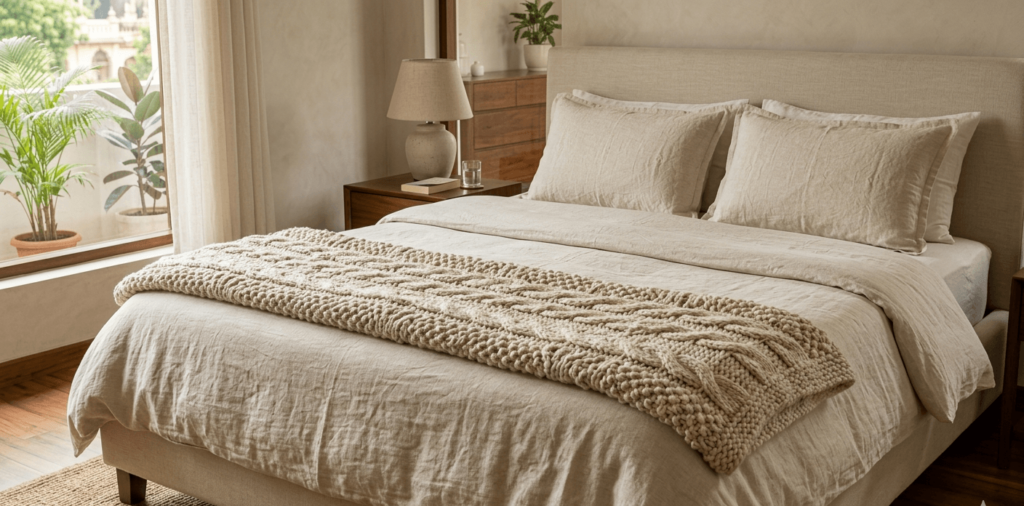
One quality textile anchors the room. Two or three, thoughtfully chosen, make it feel complete.
Idea 11: Hide the Cables and Tech
Visible cables, routers, power strips, and TV remotes scattered across surfaces instantly undermine even a beautifully decorated room. In 2026, minimalist homes use cable management as a deliberate styling step — hiding tech behind doors, routing cables through wall clips, and keeping routers in drawers or boxes.
Invisible technology is one of the verified 2026 home decor trends highlighted by Povison’s trend report (January 2026): media units and side tables that hide routers, cables, and chargers so your living room doesn’t look like a tech store.
Simple cable and tech hiding solutions:
- A decorative lidded box or woven basket to house a router and its cables
- Cable management clips along the back of desk or TV unit legs
- A TV unit with closed-door storage so remotes, consoles, and cables disappear
- A desk cable tray fixed under the worktop surface, invisible from seated height
This single change — hiding what is functional and not beautiful — is free or near-free and produces a dramatic difference in how considered a room feels.
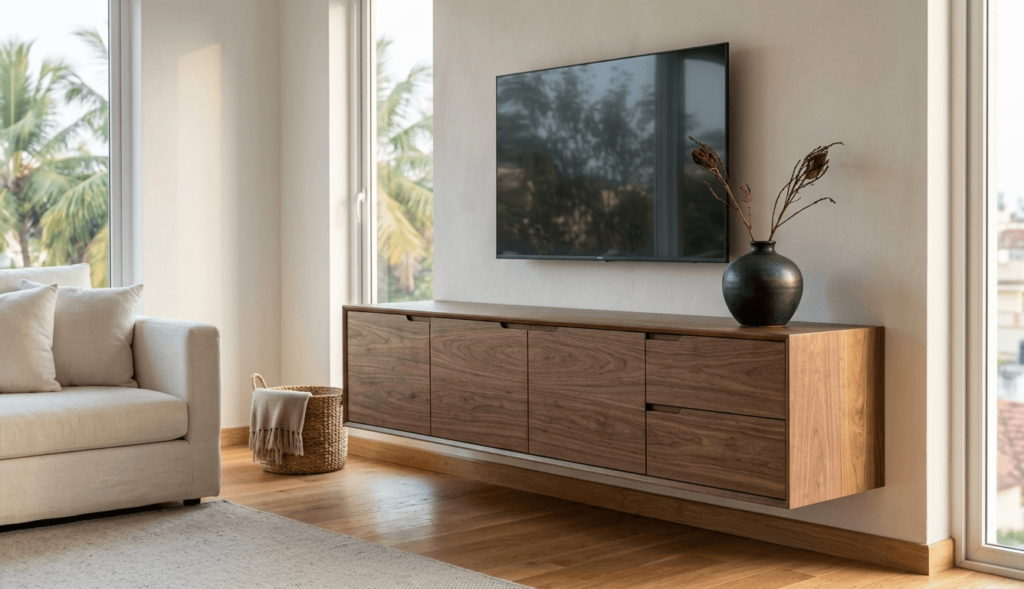
Tech hidden. Final idea is the one most people underestimate completely.
Idea 12: Upgrade Your Candles and Scent
Scent is the only sense that bypasses conscious processing and creates an immediate emotional response. A home that smells good feels expensive before you have even looked at the decor. A quality candle displayed on a styled surface serves double duty — it adds to the visual aesthetic and sets the sensory atmosphere that makes a room feel genuinely curated.
This is not a trivial point. Luxury hotels invest significantly in signature scents specifically because scent creates a perception of quality and care before anything else registers. You do not need a luxury price tag to achieve the same effect.
What makes a candle look and feel expensive in a minimalist home:
- A simple, clean vessel: clear glass, matte ceramic, or concrete
- No busy branding on the outside (or turn the label to the back)
- Grouped with other objects of similar height on a tray
- Natural wax (soy or beeswax) burns cleaner and longer than paraffin
A ₹300 candle in a beautiful vessel on a styled tray looks expensive. A ₹1,500 candle in a bag on a counter does not. Presentation, again, does the work.
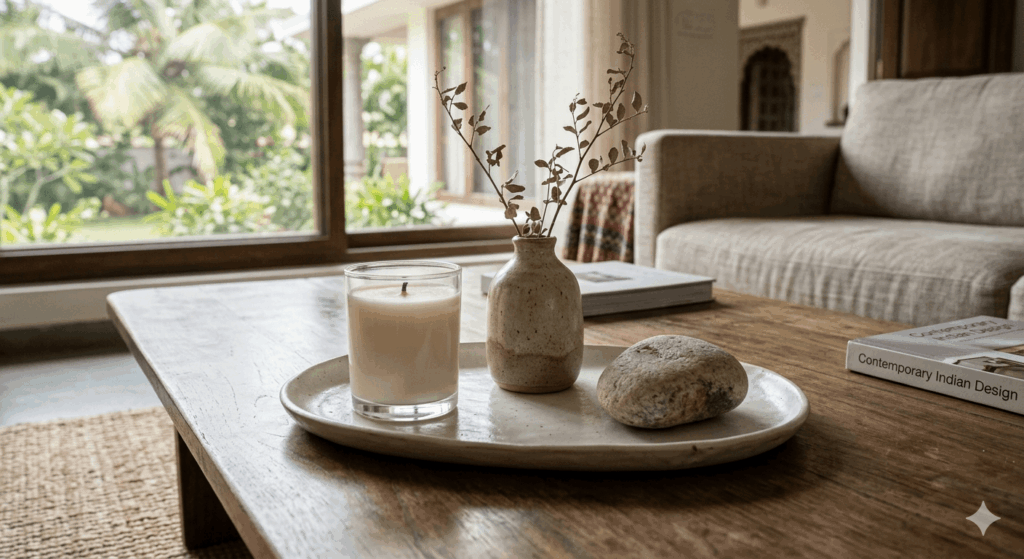
Scent and styling working together. That is what a truly expensive-looking minimalist home feels like.
Minimalist Home Decor Ideas Compared: Quick Reference
| Idea | Cost Level | Impact | Best Room |
|---|---|---|---|
| Declutter and clear surfaces | Free | Very High | Every room |
| Warm neutral color palette | Low (paint) | Very High | Living room, bedroom |
| Layer natural textures | Low | High | Living room, bedroom |
| Statement plant in quality pot | Low | High | Living room, hallway |
| Fix lighting with warm bulbs + lamps | Low | Very High | Every room |
| Swap cabinet hardware | Low (₹80-300/handle) | High | Kitchen, bathroom, bedroom |
| One large art piece | Low-Medium | High | Living room, bedroom |
| Strategic mirror placement | Low-Medium | High | Hallway, living room |
| Rule of three surface styling | Free | Medium | Shelves, coffee table |
| One quality textile per room | Low-Medium | High | Bedroom, living room |
| Hide cables and tech | Free-Low | Medium | Living room, home office |
| Upgrade candle and scent | Low | Medium | Living room, bedroom |
Frequently Asked Questions
Conclusion
A home that looks expensive on a budget is not a matter of luck or a big renovation budget. It is a series of deliberate, repeatable choices — the right neutral palette, natural textures, quality lighting, intentional negative space, and the discipline to edit rather than accumulate.
Start with the two free ideas: declutter your surfaces and switch your light bulbs to warm white. Those two changes alone will transform how your home feels before you spend a single rupee on anything new.
From there, work through this list one idea at a time. A statement plant. A hardware swap. One large artwork. A linen throw. Each change builds on the last.
The same philosophy applies beyond the home — if you enjoy the “expensive on a budget” approach to styling, the same principles translate directly to how you dress. The guide on outfit formulas that make cheap clothes look expensive covers the fashion equivalent of every idea in this article.
In 2026, looking expensive is about intention, not investment. Start small. Edit often. Your home will thank you.